
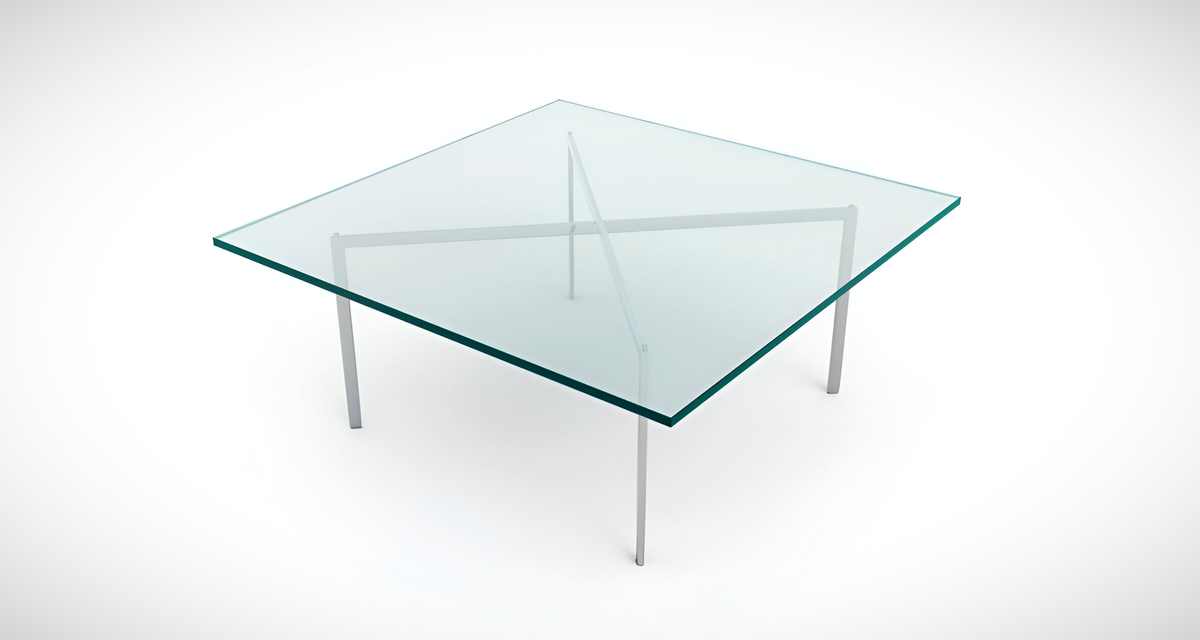
The Barcelona Table by Ludwig Mies van der Rohe has long occupied a rare space in the world of design. It is not merely a functional surface or a decorative object. It is an example of how architecture, philosophy, and craftsmanship can merge into a single piece of furniture that remains influential decade after decade.
First introduced in 1929 for the German Pavilion in Barcelona, the table carries with it a refined presence shaped by principles of clarity, proportion, and material integrity. Its structure feels honest, the appearance feels calm, and its purpose feels universal.
The Barcelona Table has become a celebrated example of time proof design because it invites careful observation without overpowering the spaces it inhabits. It adapts yet retains identity. It stands refined but never rigid. This article explores the origins of this iconic piece, the concepts that shaped it, its cultural impact, and the reasons it is likely to remain relevant far into the future.
Barcelona Table Origins: Architecture Meets Furniture
In 1929, Ludwig Mies van der Rohe and Lilly Reich embarked on a commission that would ultimately shape the trajectory of modern design. They were asked to create the German Pavilion for the Barcelona International Exposition. Unlike many pavilions focused on demonstrating industrial achievements or national progress, this structure was conceived as an expression of a new architectural attitude.
The pavilion featured glass, steel, marble, travertine, and onyx arranged in a layered composition of floating planes and open flows. Visitors entered a calm environment where walls did not confine so much as guide movement. The reflecting pool, light filtering through translucent surfaces, and carefully selected materials created a sensation of balanced harmony.
Within this environment, furniture could not be an afterthought. It had to reflect the architecture. It had to feel like a natural continuation of the design language. This is where the Barcelona Collection emerged, including the Barcelona Chair, the ottoman, and of course, the Barcelona Table.
The Philosophy Behind the Barcelona Table Design
Mies van der Rohe famously pursued simplicity with purpose. His principle “less is more” was not a stylistic approach but a conceptual one. He believed design should uncover the essence of things rather than mask it.
The Barcelona Table expresses this idea through its construction: a cross shaped steel frame that is structurally direct and visually balanced, paired with a glass top that creates a sense of openness. There is no ornament. There is no unnecessary volume. Every angle, junction, and intersection is resolved with precision.
This simplicity is not minimalism for its own sake. It is clarity turned into form. The table participates in the architecture rather than competing with it. The transparency of the glass allows the floor, light, and space around it to become part of the visual experience. The frame quietly defines proportion without overwhelming the environment.
It is a design born from architectural thinking, shaped by both Mies and Reich with an attention to detail that transcends trends.
Why the Barcelona Table Is a Time Proof Classic
Material Honesty and Craftsmanship
One of the reasons the Barcelona Table remains so admired is its embrace of material honesty. The mirror polished steel frame is not disguised or coated. The glass top is not tinted or textured. Each material appears exactly as it is intended, without manipulation for the sake of stylistic effect.
Producing the table requires skill. The steel frame demands meticulous finishing, with each intersection forming precise angles that must align perfectly. The glass must achieve flawless clarity to ensure it integrates seamlessly with the frame. Licensing manufacturers continue to follow the original specifications laid out during its creation, maintaining the integrity that is central to its identity.
This dedication to craftsmanship ensures the Barcelona Table does not feel mass produced, even in modern manufacturing environments. Instead, it feels intentionally made, carrying the same disciplined character envisioned nearly a century ago.
Adaptability Across Eras
The enduring appeal of the Barcelona Table lies partly in its remarkable adaptability. While many designs reflect a specific era, this table carries no stylistic baggage. Its geometric purity allows it to fit into varied spaces without feeling out of place.
The table often introduces a sense of clarity in contemporary interiors. Within more traditional settings, it provides contrast without causing conflict. Minimalist spaces benefit from its reinforcement of simplicity, while eclectic environments gain a stabilizing element that does not demand attention yet elevates everything around it.
The transparency of the glass plays a significant role in this adaptability. It allows sightlines to remain open, preserves natural light, and creates a visual lightness that feels appropriate in compact apartments, large studios, and spacious corporate settings alike.
Barcelona Table Cultural and Philosophical Significance
A Symbol of Modern Identity
Throughout the twentieth century, the Barcelona Table came to symbolize a broader movement toward clarity, rationality, and purposeful living. Corporate offices embraced it to signal professionalism and refined taste. Architects integrated it into their own studios as a nod to modernist principles. Homeowners selected it for living rooms, libraries, and meeting areas because it felt both present and unobtrusive.
The table did not fade during design movements that questioned modernism. While some pieces became associated with specific decades or cultural moods, the Barcelona Table remained valued because it did not rely on stylistic gestures. It relied on proportion, structure, and integrity.
Architecture in Miniature
The Barcelona Table can be understood as a miniature expression of Mies’s architectural vision. The open structure resembles the clarity found in his buildings. The steel joints recall the precision of architectural detailing. The glass echoes Mies’s belief in transparency as a tool for shaping space.
When observing the table, one can see the same logic applied in larger works like the Farnsworth House or the Crown Hall. It becomes a study object for designers, illustrating how simplicity and strength can coexist without contradiction.
A Connection to Design Heritage
Choosing a Barcelona Table brings with it a connection to one of the most influential design legacies of the twentieth century. The German Pavilion marked a turning point in architectural thinking, and the furniture created for it helped carry those ideas into homes and public spaces around the world.
This heritage gives the table emotional resonance. It represents vision, refinement, and a profound respect for materials. As people increasingly seek authenticity in the objects they live with, the Barcelona Table continues to meet that desire.

Future Relevance: Why the Barcelona Table Design Endures
Long-Term Values in a Changing World
Design trends shift rapidly, but values such as clarity, proportion, and honesty remain meaningful across generations. The Barcelona Table embodies these principles so effectively that it feels stable and contemporary even as cultural phases evolve.
Because it does not rely on ornamentation or stylistic novelty, it avoids the aging that affects fashion driven objects. Its appeal lies in balance, which is a universal and enduring quality.
Aligning With Today’s Lifestyles
Modern lifestyles require furniture to be adaptable. Homes now serve as offices, creative spaces, and social areas. The Barcelona Table aligns with these needs. Its transparency reduces visual clutter, making small spaces feel larger. Its structure offers a refined presence suitable for both professional and relaxed environments.
As interiors continue to favor open layouts and natural light, the table’s relationship with space becomes even more relevant. It supports modern living patterns without dictating them.
Inspiring Future Designers
For design students and professionals, the Barcelona Table continues to be a valuable reference. Teachers use it to explain proportion. Researchers examine its structural logic. Designers study its integration of materials.
It also inspires digital creators who work with virtual staging, augmented reality, or architectural visualization. The table appears naturally in digital environments because its form expresses clarity, making it a standard object for testing spatial compositions.
Craftsmanship, Sustainability, and Legacy
Durability and Responsible Design
As society becomes more conscious of sustainability, the Barcelona Table aligns with the values of long-term ownership and responsible consumption. The materials are durable, and the construction is built to last. Over time, the aesthetic remains unchanged, unaffected by seasonal shifts in taste.
Purchasing a Barcelona Table is not a temporary choice. It is an investment in longevity, making it suitable for individuals who seek pieces that remain meaningful for decades.
Evolving With Technology
Manufacturing technologies continue to evolve, offering more precise tools for cutting, welding, and polishing steel. These advancements enhance the already high level of craftsmanship associated with the Barcelona Table.
Digital tools also broaden its reach. Designers use it in virtual interior models, real estate presentations, and augmented reality apps because its form remains reliable and visually balanced. This digital presence strengthens its influence across future generations.
A Design That Inspires Generations
Ultimately, the lasting power of the Barcelona Table stems from its ability to express refined thinking through direct form. It represents a moment in design history that still informs modern living.
Whether placed in a living room, a reading corner, a corporate lobby, or an art gallery, it carries forward a legacy rooted in clarity, proportion, and material respect. As long as designers and homeowners seek meaningful and long lasting objects, the Barcelona Table will continue to stand as a piece that remains truly timeless.