
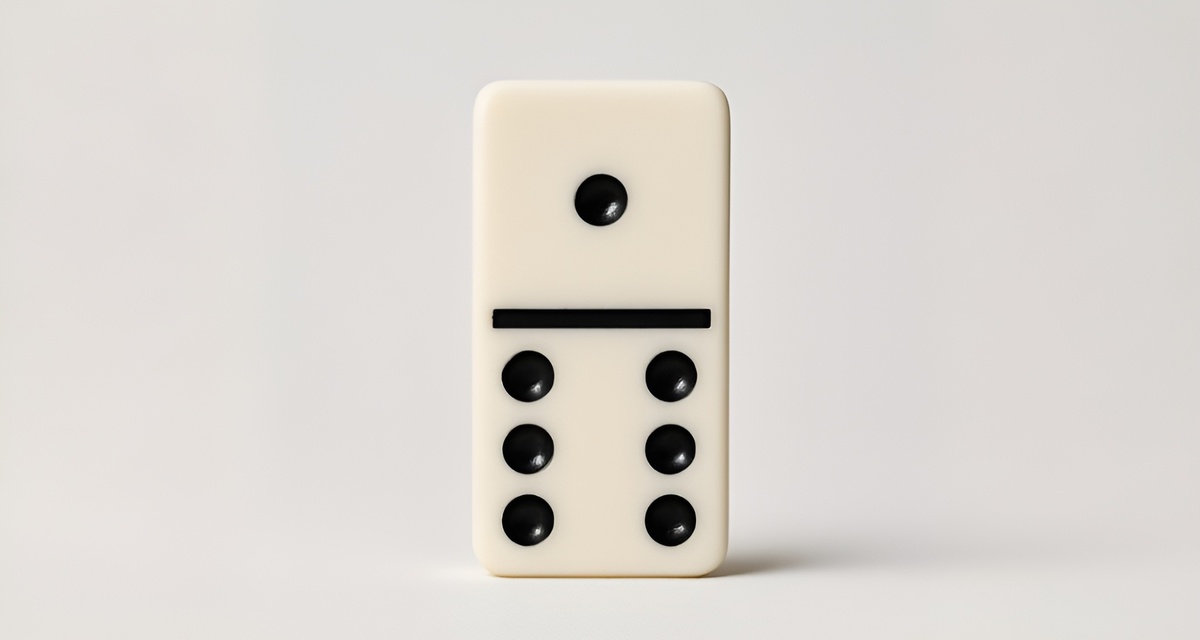
When we think about design that withstands centuries, our minds often wander to architecture, chairs, cutlery, or iconic watches. Yet there is a silent, rectangular artifact that has stood shoulder to shoulder with these giants of cultural relevance: the domino. At first glance, the design of dominoes seems almost modest, small rectangular tiles, divided by a line, carrying dots that represent numbers. But hidden within that humble form is one of the most resilient and universal design stories in human history.
The dominoes design is not just about gaming pieces. It represents a way of thinking, a cultural bridge, and an object that transcends time. Few designs can boast such endurance, existing largely unchanged for nearly a thousand years, and continuing to thrive in the digital era.
In this article, we will explore the origins of dominoes, their timeless design qualities, their historical evolution, and why the dominoes design remains relevant in the modern world, and will continue to do so for centuries to come.
The Origins of Dominoes: A Journey Back in Time
The story of dominoes begins in China during the Song Dynasty, around the 12th century. Historical records mention the appearance of tile-based games that resemble what we now recognize as dominoes. The earliest dominoes were thought to represent all possible outcomes of throwing two dice. This link between chance and order encapsulated a deeply human fascination with pattern and probability.
Unlike dice, which were three-dimensional cubes, dominoes took on the form of flat rectangular tiles. This made them portable, stackable, and highly versatile. Their design allowed them to be arranged in multiple ways, lined up for toppling in chains or laid flat for complex games. This modular simplicity is one of the first clues as to why the design has endured for so long.
By the 18th century, dominoes had traveled along trade routes to Europe, particularly Italy. From there, the game spread to France and across the continent, eventually reaching the Caribbean and the Americas. In each new cultural setting, dominoes took on fresh meanings and became woven into the social fabric, especially in regions like Cuba, Puerto Rico, and the Dominican Republic, where the game is a cherished tradition.
Why the Dominoes Design Is Timeless
What makes a design timeless? Typically, it is a mix of simplicity, adaptability, recognizability, and emotional resonance. The dominoes design possesses all of these qualities in abundance.
- Simplicity in Form
A domino tile is a rectangle, cleanly divided in two by a line. The dots or “pips”, are arranged in patterns ranging from blank to six, though variations exist. This simple arrangement can be instantly understood by anyone, regardless of language or culture. - Modular and Scalable
Dominoes can function individually or as part of a set. Their design allows for endless rearrangement: lining them up for toppling, using them in strategic games, or even employing them in art installations. This modularity makes them both playful and functional. - Cultural Adaptability
The same tile design has been used for different games in different parts of the world. In China, they were linked to dice and gambling traditions. In Italy and France, they evolved into strategy-based games. In the Caribbean, they became a symbol of community and leisure. This adaptability is key to why dominoes have remained relevant across so many centuries. - Tactile and Human-Centered
The weight of a domino tile, the smoothness of its surface, and the satisfying sound it makes when tapped on a table contribute to its longevity. It is not just a visual design but a sensory design, something people want to touch and use.
Historical Evolution of Dominoes Design
Although the domino tile has remained remarkably consistent, subtle evolutions have occurred through history, reflecting technological advancements and aesthetic tastes.
- Chinese Dominoes: These were longer and narrower than modern ones, often crafted from bone or ivory, sometimes inlaid with precious materials. The designs were ornate, reflecting the artistic traditions of the time.
- European Dominoes: When the game reached Italy in the 18th century, dominoes became more standardized. They were crafted from wood and bone, with pips often drilled and filled with black paint or ebony plugs for contrast.
- Victorian Era Dominoes: During the 19th century, dominoes became a staple of parlors. Sets were made from exotic woods, ivory, and even silver for the wealthy. The Victorian fascination with objects of leisure elevated dominoes to a collectible item.
- 20th Century Mass Production: With the advent of plastic and bakelite, dominoes became widely accessible. The design became more consistent, ensuring uniformity and durability. This was the era when dominoes solidified as a game for everyone.
- Digital Dominoes: Today, the dominoes design has migrated seamlessly to the digital world. Online dominoes platforms and mobile apps replicate the tile’s visuals with precision. Despite being pixels on a screen, the core design remains unchanged, underscoring its adaptability.
The Conceptual Approach to Dominoes Design
From a design perspective, dominoes embody the principle of reduction to essentials. Every element of a domino tile serves a purpose:
- The Rectangle: Provides stability and stackability.
- The Dividing Line: Creates two clear zones, making the piece instantly readable.
- The Pips: Communicate values without words or numbers, allowing universal comprehension.
This design language is similar to that of other timeless objects, such as playing cards, dice, or chess pieces. They are minimal yet powerful. Their simplicity allows infinite complexity in play, making them inexhaustible sources of entertainment and strategy.
Why Dominoes Will Remain Relevant in the Future
The question arises: why will dominoes continue to matter in the centuries ahead? The answer lies in their fusion of analog and digital universality.
- Tangible Play in a Digital Age
As technology advances, the human desire for tactile, face-to-face interaction grows stronger. Dominoes fulfill this need. They are portable, social, and do not require electricity or internet. This makes them immune to obsolescence. - Cultural Symbolism
In many communities, dominoes are more than a game, they are a ritual of gathering. In Havana or San Juan, domino tables in public squares are spaces of connection and storytelling. This cultural significance will not disappear with technological change. - Digital Longevity
Dominoes have already proven their ability to transition into the digital world. Online platforms attract millions of players, ensuring the game’s survival even if physical tiles were less common. - Educational Value
Dominoes are used in mathematics and logic education, teaching concepts like sequencing, probability, and strategic thinking. This makes them relevant in academic contexts, ensuring ongoing use across generations. - Design Inspiration Beyond Gaming
The domino principle, chain reactions triggered by simple forms, has inspired engineering, art, and even theoretical physics. The concept of the “domino effect” is now a metaphor in global culture, showing how deeply embedded the design has become.
The Timeless Legacy of Dominoes
The dominoes design has survived wars, cultural shifts, industrial revolutions, and the digital transition. Its enduring relevance is rooted in its balance of simplicity and complexity. The object itself is simple, but the possibilities it unlocks are infinite. This is what separates time proof designs from fleeting trends.
Looking ahead, dominoes will continue to be more than a pastime. They will remain a symbol of human connection, creativity, and culture. Whether made of ivory, plastic, or pixels, the design holds strong. The world may change, but the rectangle with dots will still invite us to sit at a table, share a laugh, and let the pieces fall into place.
Dominoes design is not just a story of gaming. It is a story of humanity. It represents how design can be both functional and poetic, how something so small can carry so much cultural weight, and how true timelessness lies not in complexity but in clarity. As long as people seek connection, strategy, and play, the domino will never lose its relevance.