
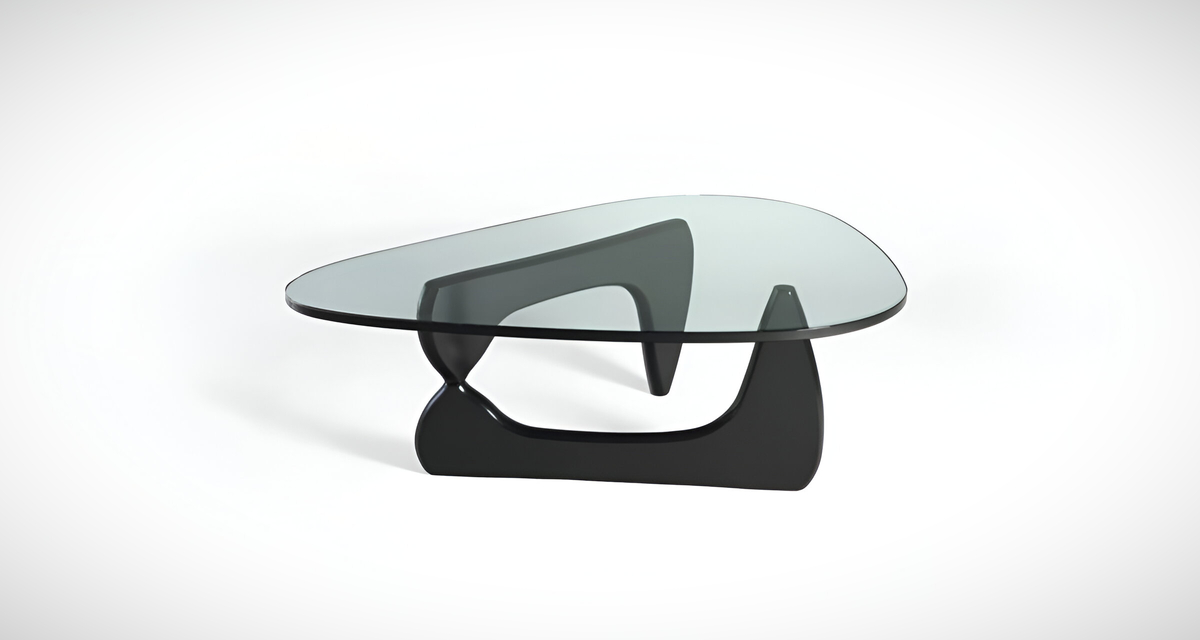
The Isamu Noguchi Coffee Table is not simply a piece of furniture. It is a cultural artifact, a sculptural object, and a living idea that continues to shape modern interiors decades after its creation. Few designs manage to sit so effortlessly at the intersection of art, industrial design, and everyday life. Even fewer remain as relevant today as when they were first introduced. The Noguchi Coffee Table does both, and more.
This article explores the history, concept, and enduring relevance of the Isamu Noguchi Coffee Table, tracing its origins, cultural heritage, and lasting influence. It also explains why this iconic design continues to resonate in contemporary interiors and why it will remain timeless well into the future.
Origins of the Isamu Noguchi Coffee Table
The Isamu Noguchi Coffee Table was designed in 1944 by Japanese American artist Isamu Noguchi, one of the most influential creative minds of the twentieth century. Noguchi was not easily categorized. He worked fluidly across sculpture, architecture, landscape design, stage sets, lighting, and furniture. His work consistently questioned the boundaries between fine art and functional objects.
The coffee table emerged during a period of profound personal and cultural complexity. Noguchi, born in Los Angeles to a Japanese poet father and an American writer mother, lived between cultures. This dual identity shaped his approach to design, blending Japanese philosophy, modernist abstraction, and Western craftsmanship.
Originally conceived as a sculptural object rather than a commercial product, the table was first created for the lobby of the Herman Miller headquarters. At the time, modern furniture was still defining itself, and the idea that a coffee table could function as sculpture was radical.
The Concept Behind the Design
At its core, the Noguchi Coffee Table design is an exploration of balance, gravity, and harmony. The table consists of just three elements:
- A thick glass top
- Two identical wooden legs
- A self supporting interlocking base
This simplicity is intentional. Noguchi believed that reducing a form to its essential components allowed it to speak more clearly. The curved wooden base resembles abstracted human forms or natural elements, depending on the viewer’s interpretation. The glass top appears to float, creating a sense of lightness that contrasts with the solidity of the wood.
This was not furniture designed to disappear into a room. It was designed to be present, to invite contemplation, and to anchor a space emotionally as well as visually.
Noguchi once described his furniture as sculpture for everyday use, a phrase that perfectly captures the philosophy behind the coffee table. It is functional, but it also asks the user to slow down and notice form, proportion, and material.
Influences From Early Design and Sculpture
The roots of the Isamu Noguchi Coffee Table can be traced back to Noguchi’s early training and influences. He studied sculpture in New York and Paris, where he worked briefly as an assistant to Constantin Brâncuși. From Brâncuși, Noguchi absorbed a respect for pure form, material honesty, and reduction.
At the same time, Noguchi was deeply influenced by traditional Japanese aesthetics, particularly the concept of ma, the space between objects, and wabi sabi, the appreciation of imperfection and impermanence. These ideas informed his approach to furniture as an extension of space rather than a separate object.
Earlier Noguchi designs, such as his biomorphic sculptures and playground concepts, already hinted at the language later refined in the coffee table. Organic curves, asymmetry, and human scale were consistent themes. The table can be seen as a distilled expression of decades of exploration.
From Sculpture to Iconic Furniture Design
The transition from sculptural prototype to widely recognized furniture piece occurred when Herman Miller began producing the table commercially in the late 1940s. This partnership was significant. Herman Miller was at the forefront of modern design, working with figures like Charles and Ray Eames and George Nelson.
By placing the Noguchi Coffee Table alongside other modernist icons, it became part of a broader cultural shift. Homes were changing. Living rooms were becoming more informal, more fluid, and more expressive. The coffee table emerged as a central object in this new domestic landscape.
Unlike many modernist designs of the era, the Noguchi Coffee Table avoided strict geometry. Its organic form set it apart, allowing it to coexist with both minimalist interiors and more eclectic environments. This adaptability helped secure its lasting popularity.
Why the Isamu Noguchi Coffee Table Is Time Proof
Many designs feel anchored to a specific decade. The Isamu Noguchi Coffee Table does not. Its ability to transcend trends is rooted in several key qualities.
- First, the form is archetypal. The table feels familiar without being derivative. It echoes natural shapes found in the body, landscape, and sculpture, which gives it a universal appeal.
- Second, the materials are honest. Solid wood and glass age gracefully. They do not rely on surface decoration or novelty finishes that date quickly.
- Third, the design resists over explanation. There is no overt narrative imposed on the viewer. Instead, the table invites interpretation, which allows it to remain relevant across generations.
Because of these qualities, the Noguchi Coffee Table has appeared consistently in interiors from the 1950s to today, featured in homes, galleries, films, and editorial photography.
Cultural Impact and Global Recognition
The Isamu Noguchi Coffee Table is now part of the permanent collections of major museums, including the Museum of Modern Art in New York. It is studied in design schools and referenced in discussions about the relationship between art and industry.
Its influence can be seen in countless contemporary furniture designs that embrace sculptural bases and transparent surfaces. Yet despite many reinterpretations, the original remains unmatched in its balance and clarity.
The table also reflects a broader cultural moment. Created during World War II, at a time of displacement and uncertainty for Japanese Americans, it stands as a quiet assertion of creativity, resilience, and cross cultural dialogue.
Evolution and Production From Then to Now
Although the core design has remained unchanged, the production of the Noguchi Coffee Table has evolved. Advances in manufacturing have improved consistency and sustainability, while maintaining fidelity to the original form.
Today, the table is produced under license by Herman Miller and Vitra, depending on the region. Each piece adheres closely to Noguchi’s specifications, ensuring that the proportions, materials, and finishes remain true to his vision.
This continuity is rare in industrial design. Many products are modified or diluted over time. The Noguchi Coffee Table, by contrast, has been protected as a design object of cultural significance.
The Noguchi Coffee Table in Contemporary Interiors
In modern homes, the Noguchi Coffee Table design continues to feel relevant. It pairs naturally with contemporary sofas, mid century modern furniture, and even traditional elements. Its transparency helps small spaces feel open, while its sculptural base provides visual interest.
Interior designers often use it as a grounding element, allowing other pieces to orbit around it. Because it does not dominate with color or ornament, it supports a wide range of palettes and textures.
Importantly, the table also aligns with current values around buying fewer, better objects. As consumers move away from disposable furniture, iconic designs with lasting value become more attractive.
Why This Design Will Remain Timeless in the Future
Looking ahead, the relevance of the Isamu Noguchi Coffee Table is unlikely to fade. In fact, it may become even more meaningful.
As digital life accelerates, people increasingly seek physical objects that feel grounded and authentic. The table’s tactile materials and human scale offer a counterbalance to screen based living.
Sustainability will also shape the future of design. Objects that endure, both physically and aesthetically, are inherently more sustainable than trend driven alternatives. The Noguchi Coffee Table has already proven its longevity over more than seventy years.
Moreover, the design embodies values that remain essential. Respect for craft, clarity of form, and the blending of cultures are ideas that continue to resonate in a globalized world.
Final Thoughts: A Living Piece of Design History
The Isamu Noguchi Coffee Table is more than an icon of modern furniture design. It is a living expression of an artist’s philosophy, shaped by history, culture, and a deep understanding of form.
From its sculptural origins to its place in contemporary interiors, the table has maintained its relevance without compromise. It does not chase trends. Instead, it offers something rarer: a sense of calm, balance, and meaning.
As long as people value thoughtful design and objects that enrich daily life, the Isamu Noguchi Coffee Table will remain a powerful presence and a true time proof design. Not as a relic of the past, but as a continuing conversation between art, design, and the spaces we inhabit.