
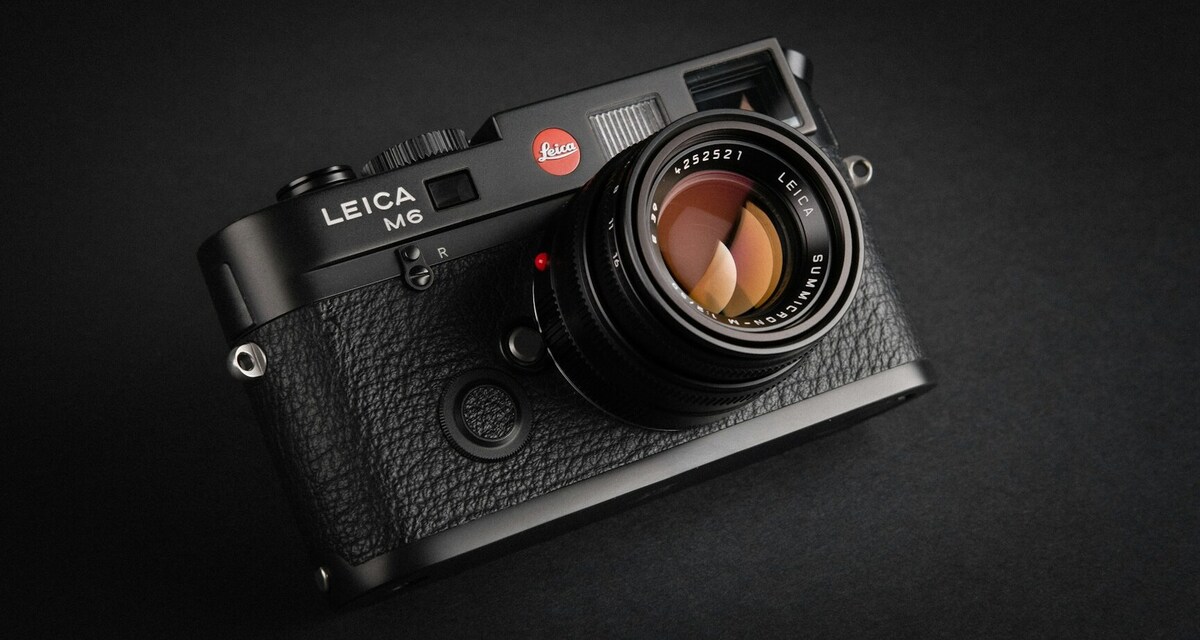
Leica M-Cameras have defined the essence of photographic excellence. But what makes the Leica M-Camera a time proof design? Its innovative yet classic design has not only withstood the test of time, but has continually inspired photographers, designers, and engineers around the globe. Even as a very high-end piece of equipment, its premium price is a quiet nod to the meticulous engineering and legacy embedded in every model. The appeal of the Leica M-Camera lies not only in its functionality and the quality it offers but also in its history, aesthetic and the way it reflects a perfect harmony between form and function.
This article takes a journey through the design philosophy of the Leica M-Camera, its evolution, and its staying power. By examining its origins, key models, and the enduring value it holds, we will explore why this camera continues to be a symbol of excellence, craftsmanship, and heritage in the world of photography.
Origins of the Leica M-Camera: A Revolution in Photography
The Leica M-Camera series was born in 1954, with the introduction of the Leica M3, a revolutionary model that changed the world of photography. Developed by Leitz, a German company renowned for its precision optics, the M3 was a breakthrough in camera design, offering features that were previously unseen in the market.
Before the M3, rangefinder cameras (which allow for precise focusing through a built-in viewfinder) were considered cumbersome and prone to user error. The M3 broke this mold with its viewfinder system, which was brighter, clearer, and more intuitive than anything seen before. This innovation paved the way for the future of compact professional cameras.
But it wasn’t just the mechanics that made the M3 a game-changer. The design philosophy of the Leica M-Camera also helped shape its place in photographic history. The M3’s clean lines, minimalist controls, and lack of superfluous elements made it both elegant and functional. It didn’t overwhelm the photographer with complex settings or extraneous features. Instead, the Leica M3 offered purity in its design, focusing solely on the essentials: composition, light, and focus.
This no-frills approach resonated deeply with photographers, many of whom were looking for a tool that would allow them to focus solely on their craft without being distracted by complicated technology. The Leica M3 was as much about the experience of photography as it was about the output. In a world increasingly defined by digitalization, the Leica M-Camera kept the human element at its core.
Learn more about Leica History:
The Design Concept: The Power of Simplicity
At the heart of the design philosophy is its simplicity. Form follows function, a principle that is still evident in all M-Camera models to this day. The M3, and subsequent models in the series, were crafted with a singular focus on clarity and usability.
This approach isn’t just about reducing features for the sake of it; it’s about providing only the tools that the photographer truly needs. The camera is designed to be an extension of the photographer’s eye, not a barrier between them and their subject. The tactile feel of the camera, its compact size, and the precision of its controls make it possible for photographers to stay fully immersed in their craft.
The rangefinder system remains a standout feature of the Leica M-Camera, allowing users to focus quickly and accurately with just one eye on the camera. This contributes to the discreetness of the camera, which is another key element of its design ethos. A Leica M-Camera doesn’t shout for attention. Instead, it allows photographers to blend into their surroundings, capturing moments in a way that feels natural and organic.
In an era dominated by digital gadgets with endless buttons, menus, and settings, the Leica M-Camera is a reminder of the power of restraint. It focuses on the basics: exposure, focus, and composition. This design approach makes the camera intuitive to use while allowing photographers to remain focused on their art rather than the technology.
Evolution: From the M3 to the Digital Era
The success of the Leica M3 set the stage for a series of evolutions in the M-Camera line. Over the decades, the Leica M-Camera has been updated with new features, technologies, and improvements, yet the core principles of the design have remained unchanged.
- Leica M3 (1954): As discussed, the M3 revolutionized camera design with its rangefinder system and minimalist controls, offering a clean, efficient way to focus and compose images. This model is still revered for its legendary viewfinder and build quality.
- Leica M6 (1984): The M6, released 30 years after the M3, brought a light meter to the M-Camera line, combining analog technology with a modern twist. This addition made it easier for photographers to expose images accurately in a variety of lighting conditions without losing the simplicity and elegance that defined the original M3.
- Leica M9 (2009): The first digital M-Camera, the M9 retained the classic design while introducing the digital sensor for the first time. The M9 proved that modern technology could coexist with a traditional, analog approach. Its arrival marked a new era for the Leica M series, and yet it kept the spirit of its predecessors intact.
- Leica M10 (2017): Continuing the legacy, the M10 introduced a simplified design with improved image quality and more intuitive controls. With its slimmer profile, the M10 perfectly balances modern capabilities with the traditional Leica aesthetic.
- Leica M11 (2022): Pushing the evolution further, the M11 introduced extended technological updates while maintaining the pure, manual shooting experience. The M11 is the most technologically advanced M-Camera yet, but remaining a tool designed to put the photographer in full creative control.
Though the digital M-Cameras have added new features such as live view and full-frame sensors, they have stayed true to the classic M-Camera ethos. What makes the M-Camera truly timeless is that it is built for photographers who value craftsmanship and precision over fleeting trends.


The Leica M-Camera in the Future: Timeless and Relevant
Why does the M-Camera continue to be relevant today, and why will it remain so in the future?
The secret lies in its design philosophy. The Leica M-Camera is timeless because it transcends trends. In an age where technology evolves rapidly, the M-Camera remains steadfast in its core design values. It’s a camera that encourages its users to be present, to connect with their surroundings, and to truly see. This is something that will never go out of style.
In fact, as we move further into the digital age, there will always be a place for a camera that emphasizes human connection and creativity over technological bells and whistles. It offers a simple yet profound experience, one that invites you to engage with the world around you in a deep, meaningful way.
Why the Leica M-Camera is a Designer’s Dream
For designers, the Leica M-Camera is a model of balance. Its form is a marriage of functionality and aesthetic appeal, creating an object that is both practical and beautiful. The precision of its mechanics, the quality of its materials, and the clean lines of its design all contribute to its lasting appeal.
Even in the realm of design, where trends come and go, the M-Camera is a constant. It is a reminder that true design isn’t about novelty but about creating something that stands the test of time, something that feels just as relevant today as it did decades ago.
Final Thoughts
The Leica M-Camera is more than just a camera, it is a design icon. Its evolution from the M3 to the M11 and beyond shows that true design doesn’t need to constantly reinvent itself. Instead, it builds upon what works and remains true to its roots.
As we look ahead, will undoubtedly continue to be a favorite among those who value craftsmanship, heritage, and timeless design. Whether you are a professional photographer or simply someone who appreciates great design, the M-Camera is sure to remain a relevant, inspiring, and timeless tool for many years to come.
In a world where disposable gadgets dominate, the Leica M-Camera stands as a reminder that the best designs don’t need to follow fleeting trends. They withstand the test of time, becoming a part of history and the Leica M-Camera is certainly a design that will continue to make history for years to come.