
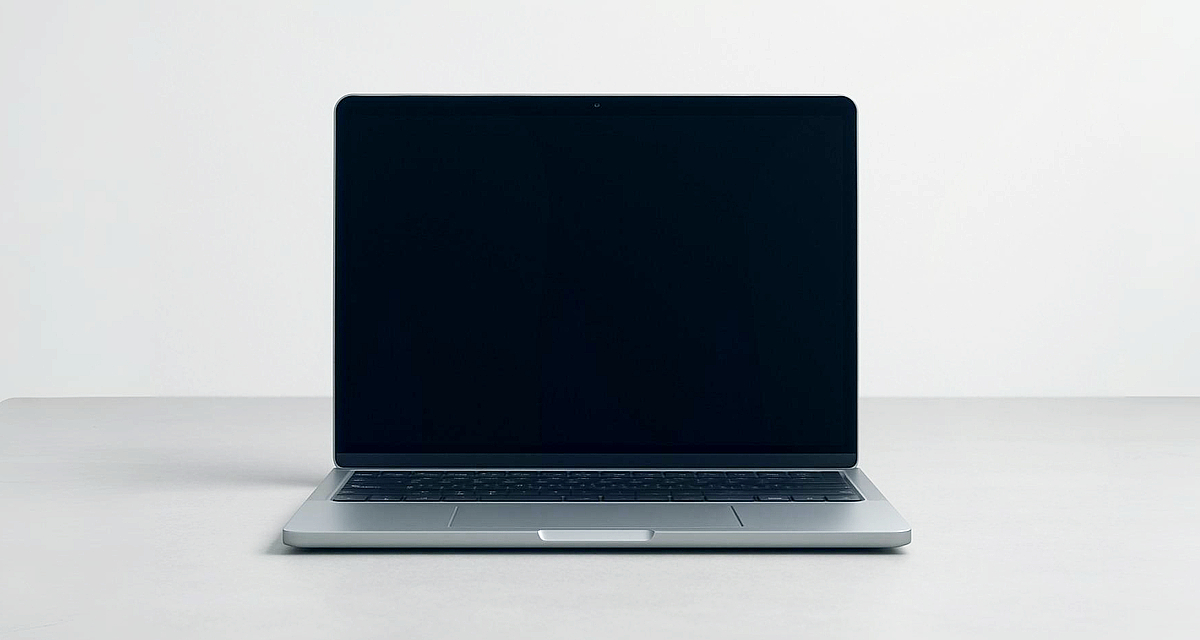
The MacBook Pro laptop as a consumer technology product, managed to blend innovation, aesthetic refinement, and functional longevity. Since its introduction in 2006, the MacBook Pro has not only shaped the trajectory of portable computing but also carved out a space in design history. It has grown into something much more than a productivity tool, it has become an emblem of minimalist sophistication, technological foresight, and enduring appeal.
But what makes the MacBook Pro a time-proof design? Why does this laptop, even amid rapid technological shifts, maintain its dominance as both a cultural and industrial design icon? To answer that, we need to look back at its origins, understand the philosophy that shaped it, and explore how its form and function continue to align perfectly across decades.
The MacBook Pro Origin: A Legacy Rooted in Design Clarity
The story of the MacBook Pro begins long before 2006. To trace its DNA, we go back to 1984, when Apple introduced the original Macintosh, a groundbreaking product not just in function, but in form. Designed by Jerry Manock and Terry Oyama, under the watchful eye of Steve Jobs, the Macintosh represented the first time a personal computer considered aesthetics with the same weight as performance. With its all-in-one design, soft curves, and friendly interface, it started a design philosophy that Apple would refine for decades.
The PowerBook line, introduced in 1991, laid the groundwork for what would become the MacBook. With the PowerBook 100 series, Apple pioneered the now-standard laptop layout, a keyboard placed behind a palm rest with a built-in pointing device. Even back then, Apple was leading not just with innovation, but with intelligent, human-centered design.
When the MacBook Pro was introduced in January 2006, it was a direct evolution of the PowerBook G4, adopting Intel processors but retaining a familiar aluminum body. But something subtle changed. Design consistency became intentional across product lines, forming a cohesive identity for all Apple devices.
Design Language: Form Follows Function, Elegantly
What makes the MacBook Pro’s design so time-proof is its relentless commitment to the balance between form and function. Unlike many devices that become obsolete in both looks and utility after a few years, the MacBook Pro evolves with restraint and precision. Apple doesn’t chase trends. Instead, it refines, rethinks, and perfects.
The use of unibody aluminum, first introduced with the late-2008 MacBook Pro, revolutionized both the durability and visual appeal of laptops. Milled from a single block of aluminum, the chassis provided exceptional strength while reducing weight. It wasn’t just about being beautiful, it was about being better engineered.
This approach mirrors the philosophy of legendary designers like Dieter Rams, whose 10 principles of good design emphasized innovation, usefulness, and longevity. Apple’s industrial design team, particularly under Jony Ive’s direction, adopted similar ideals. The result? A product that visually communicates precision and purpose.
Design Details That Matter
Timeless design is not about flash, it’s about thoughtfulness. The MacBook Pro thrives on micro-level attention that contributes to macro-level appeal.
- Symmetry: Every port, every line, and every curve follows a geometry that’s both pleasing and practical.
- Materiality: The cold, matte aluminum finish feels durable yet luxurious, aging gracefully over time unlike painted or plastic counterparts.
- Keyboard and Trackpad: The introduction of the Force Touch trackpad and the scissor-switch Magic Keyboard proved that Apple refines based on feedback, enhancing user experience without compromising aesthetics.
- Display Evolution: From the early glossy screens to the stunning Liquid Retina XDR displays, Apple ensures the visual experience stays at the cutting edge without compromising the MacBook’s design silhouette.
MacBook Pro Timeless Models: Proof of Enduring Value
Several MacBook Pro models over the years have become collectible classics. Not because they are outdated curiosities, but because they continue to hold value, even functionally, after a decade or more.
The 2012 MacBook Pro (non-Retina)
This model, with its built-in optical drive and full-size ports, was the last of its kind. It struck a perfect balance between modern capability and legacy compatibility. Even today, many of these units remain in use, upgraded with SSDs and RAM.
The 2015 MacBook Pro (Retina)
Arguably one of the most beloved models, the 2015 Retina MacBook Pro featured a stellar keyboard, robust I/O options (including HDMI and MagSafe), and a stunning display. It’s still widely sought-after due to its reliability and design equilibrium.
The 2021 MacBook Pro (14″ and 16″)
Returning to form, these models brought back ports, improved keyboard design, and introduced the M Pro and M Max chips. They demonstrated Apple’s ability to adapt without betraying its principles, merging nostalgia with cutting-edge performance.
Cultural Impact: More Than a Machine
The MacBook Pro isn’t just a design object, it became a symbol. From coffee shops to conference rooms, from artists studios to scientific labs, it sits quietly but confidently, signifying intention, discipline, and creativity.
Filmmakers, photographers, developers, and designers have adopted the MacBook Pro not just for its power, but because it feels like a tool worthy of the craft. Its presence in pop culture, in films, television, and on stage during product launches reinforces its iconic status.
A Time-Proof Approach: Why It Still Matters
So why is the MacBook Pro time-proof?
- Consistency with Purpose: Apple doesn’t reinvent for the sake of change. It evolves. Each iteration feels familiar, yet better, which builds trust and recognition.
- Minimalism Done Right: The minimal design isn’t empty, it’s considered. It eliminates only what’s unnecessary, leaving behind pure utility.
- Material Longevity: Aluminum doesn’t wear like plastic. These machines look good even after years of use. Patina, not decay.
- Adaptability Through Architecture: With the shift to Apple Silicon, the MacBook Pro has secured its future. The M-series chips bring unprecedented efficiency and power in a fanless (or nearly silent) form factor, without altering the external design drastically.
The Future of MacBook Pro Design
Looking ahead, the MacBook Pro will remain relevant not by transforming its appearance, but by evolving its internal architecture and material science. We can expect innovations like:
- Recyclable materials embedded with biometric identification
- OLED or micro-LED displays in even slimmer bezels
- Enhanced AI integration, all inside the same iconic shell
Yet its silhouette will likely remain familiar. The same way a Rolex Submariner or a Porsche 911 changes subtly over decades, the MacBook Pro will continue to carry forward its design principles while adapting its internals to the demands of the future.
A Future-Proof Philosophy Built Into Aluminum
The MacBook Pro laptop it’s a masterclass in industrial design thinking. With roots reaching back to the earliest Apple products, and a form that continues to mature without losing identity, the MacBook Pro sets the benchmark for what it means to create something lasting in a world obsessed with the new.
In every curve, port, and keystroke, there’s a philosophy that prioritizes the user without over-indulging in trends. It’s not flashy, but it’s deeply confident. That’s why the MacBook Pro remains, and will continue to remain, one of the most time-proof laptops ever made.