
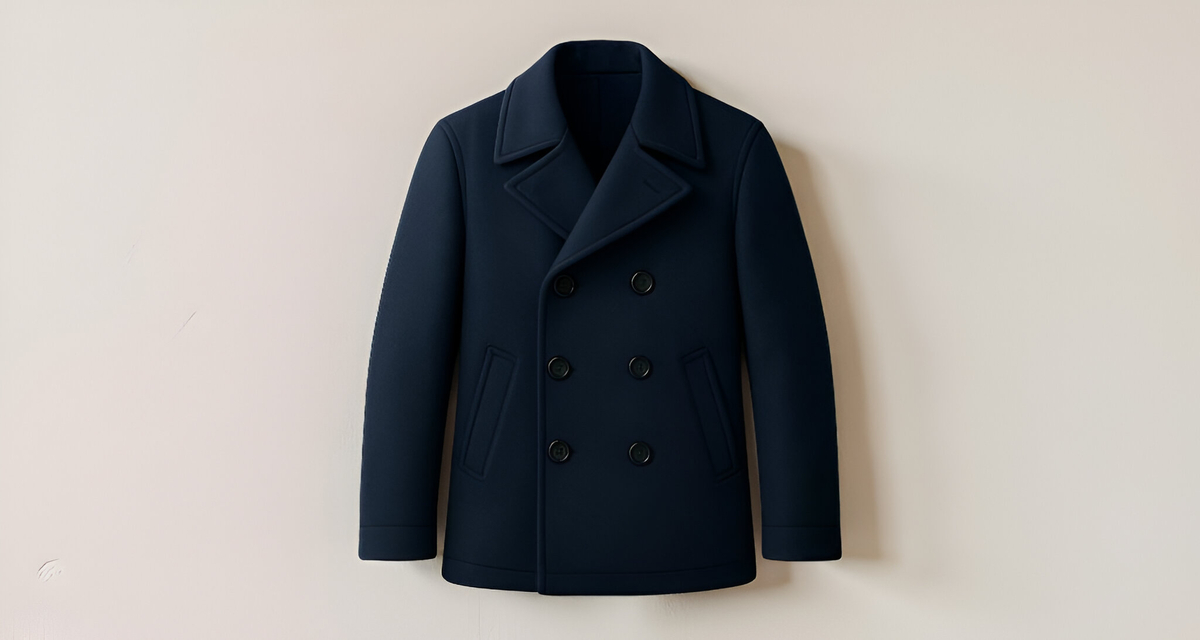
Few garments can claim a history as rich, enduring, and universally appealing as the Pea Coat Design. Born from the demands of harsh maritime life and evolving through centuries of style shifts, the pea coat remains one of the most iconic pieces in the world of fashion and industrial design.
Its roots run deep in naval history, yet its place in modern wardrobes feels as natural as it did when sailors first buttoned up against icy winds. The design is not simply an artifact of the past, it is a living example of how functional needs can inspire forms that never lose their relevance.
Early Origins: Sailors, Wool, and the North Sea
The origins of the Pea Coat Design can be traced back to the early 1700s, with strong historical links to the Dutch Navy. The Dutch term “pijjekker” or “pijjakker” referred to a coat made from coarse, heavy wool known as pij. This was no ordinary wool, it was tightly woven to repel seawater and block the relentless winds that battered sailors in the unforgiving climate of the North Sea.
As maritime trade expanded and naval power became a defining force in European politics, the British Royal Navy adopted its own version of the coat. In this early form, the pea coat was a tool for survival, not a fashion statement. Its short length allowed sailors to move freely while working, climbing rigging, and maneuvering through tight ship corridors. At the same time, the heavy wool provided critical insulation against freezing spray.
Function Driving Form
The pea coat’s design evolved directly from the needs of sailors at sea. Every element, from the cut to the choice of fabric, served a clear purpose:
- Double-Breasted Front: This overlapping closure trapped body heat and could be buttoned from either side to shield against wind coming from different directions.
- Broad Lapels: When flipped up, they offered extra protection for the neck and face, reducing exposure to cold gusts.
- Short, Hip-Length Cut: Ideal for movement, this design kept the coat from interfering with ropes and rigging.
- Vertical or Slanted Pockets: Designed to keep hands warm and accessible, even while wearing gloves.
- Anchor-Emblazoned Buttons: Beyond decoration, they served as a naval identifier and symbol of duty.
What is remarkable is that these same features have persisted for centuries, a rarity in garment design.
The British and American Adaptations of the Pea Coat Design
By the 19th century, the British Royal Navy had standardized the pea coat for enlisted sailors. Meanwhile, across the Atlantic, the United States Navy adopted its own version in the late 1800s. While early American pea coats were longer, they shared the same heavy Melton wool and functional structure as their British counterparts.
In World War I and World War II, the Pea Coat Design became an essential part of naval uniforms. Soldiers often kept their coats after service, introducing them into civilian wardrobes. The combination of warmth, durability, and understated style meant the garment transitioned seamlessly from deck to street.
Cultural Ascent: From Military Surplus to Style Staple
In the postwar era, army-navy surplus stores became a primary source for pea coats in civilian life. Students, laborers, and artists alike began wearing them, not just for warmth, but for the quiet authority the coat seemed to convey.
By the 1950s and 1960s, film and photography cemented the coat’s appeal. James Dean was famously photographed in a pea coat, his hands stuffed in its pockets, embodying a rebellious yet understated style. Robert Redford and Steve McQueen followed suit, further linking the garment to a cool, confident masculinity.
At the same time, women began incorporating pea coats into their wardrobes, drawn to the structured silhouette and versatility. It became a truly unisex garment decades before that was a widespread concept in fashion.
Design Longevity: Why the Pea Coat Design Resists Obsolescence
The pea coat has avoided the fate of many garments that peak and fade because it is built on three design principles:
- Purpose-Built Utility
Unlike clothing driven purely by aesthetics, the pea coat’s origins ensure it never feels like an empty trend. Its warmth, water resistance, and ease of movement remain just as valuable today as they were centuries ago. - Balanced Proportions
The pea coat’s symmetrical design, structured shoulders, and gently flared hem create a universally flattering shape that works for all body types. - Cultural Embeddedness
It carries a story, a link to maritime history, discipline, and exploration, giving it emotional resonance that purely decorative garments lack.
Notable Historical Models
- Royal Navy Standard Issue (Late 1800s): Heavy 32-ounce Melton wool, corduroy-lined pockets, and large brass buttons featuring an anchor motif.
- US Navy WWII Pea Coat: Thicker wool than later versions, with 10 large buttons, hand-warmer pockets, and a deep navy color almost black in appearance.
- Bridge Coat: An officer’s variation, slightly longer than the enlisted version, sometimes with gold buttons.
- 1960s Civilian Surplus Models: Often cut slimmer, with a softer hand-feel for urban wear.
These models are still sought after today by collectors and vintage clothing enthusiasts for their authenticity and craftsmanship.
Heritage in the Hands of Modern Designers
While traditional versions remain popular, the pea coat has also been a canvas for reinterpretation. Burberry has experimented with lighter fabrics and alternative colors. Schott NYC, an American heritage brand, has maintained a faithful reproduction of the US Navy version, with only minor adjustments for fit. Saint Laurent has transformed it into a luxury item, slimming the cut and using premium wools.
Even in these modern renditions, the signature double-breasted front and wide lapels remain untouched. This balance between heritage and innovation is key to its continued relevance.

The Pea Coat Design in the Future
In an era where fashion is increasingly defined by sustainability and timeless investment pieces, the pea coat has an undeniable advantage. Its durability means it can be worn for decades, reducing the need for frequent replacement. Its style avoids the rapid obsolescence of trend-driven designs, appealing to those seeking a smaller, more versatile wardrobe.
Moreover, the pea coat’s adaptability ensures it will find new audiences. Gender-neutral fashion trends, outdoor urban commuting, and climate-adapted textiles all provide fertile ground for the coat’s next chapters.
We may see versions with technical fabrics that mimic the warmth of wool while being lighter and more weatherproof, or pea coats with integrated smart storage for electronics. Yet even with these upgrades, the recognizable form will remain.
A Living Piece of Design History
When we evaluate the pea coat through the lens of industrial and product design, it stands out as a prime example of honest design, where every choice is rooted in utility and nothing is purely ornamental. The proportions, the material, the fastening system, even the color, all come from practical necessity. The beauty is a byproduct of that functionality.
From Dutch merchant ships to 21st-century city streets, the pea coat has navigated its way into the hearts and closets of people around the globe. Its journey tells us that when design solves real problems with elegance and restraint, it becomes timeless.
In the future, when fashion historians look back at the garments that truly endured, the Pea Coat Design will be among the few to bridge centuries without losing purpose or beauty. It is a coat that carries the sea in its seams, the wind in its folds, and the spirit of exploration in its very shape, and that spirit will never go out of style.