
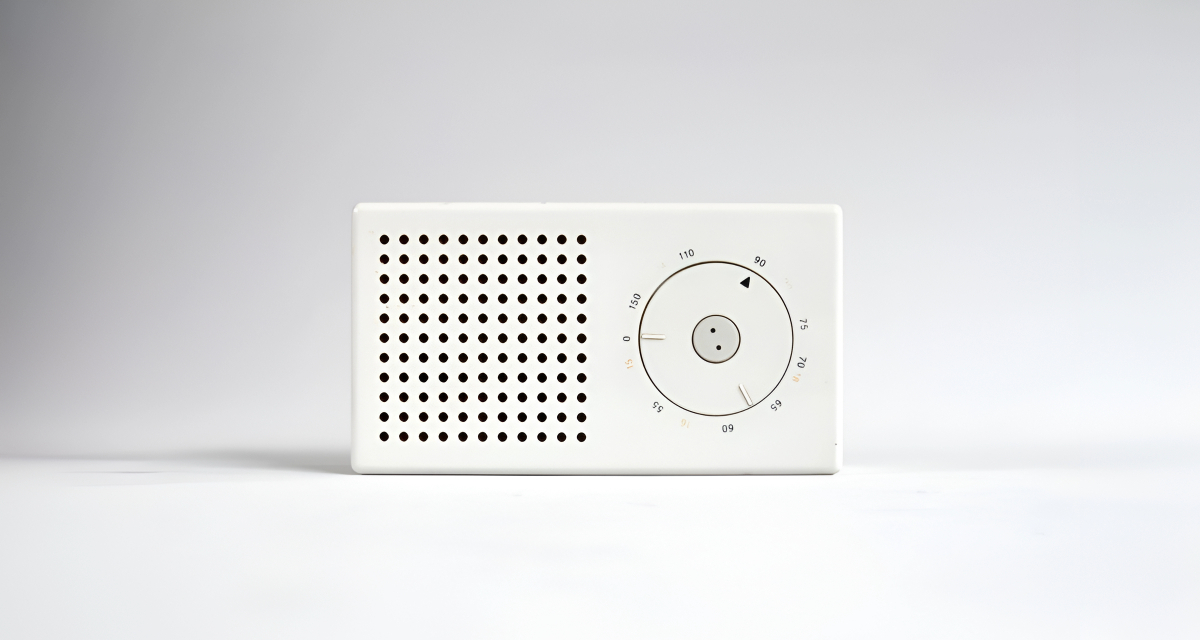
The Braun T3 Pocket Radio was designed in 1958 by Dieter Rams in collaboration with Hans Gugelot for Braun, the compact radio became one of the clearest expressions of modern product design thinking. Decades later, it still feels startlingly current.
At first glance, the T3 appears almost modest. A clean white face, a simple speaker grid, a tuning dial, and careful proportions create an object that feels calm in the hand. Yet beneath that simplicity lies a radical shift in how designers thought about technology and domestic life. The radio did not ask users to admire technical complexity. It invited them to use it naturally and intuitively.
This was a major cultural moment. During the postwar years, many consumer electronics carried heavy visual language. Products often displayed buttons, chrome accents, decorative flourishes, and exaggerated forms that celebrated machinery itself. The Braun T3 moved in another direction. It reduced visual noise and focused on clarity, usability, and human experience.
The design became influential far beyond radios. Generations of designers, including teams behind modern digital products, have referenced its visual logic and disciplined minimalism. The T3 is now viewed not simply as a consumer object but as a blueprint for thoughtful industrial design.
What makes the radio remarkable is not only how it looked in 1958. It is how contemporary it still feels today. In an era saturated with screens and endless notifications, the Braun T3 reminds us that good design can create silence, focus, and dignity.
Braun T3 Pocket Radio Design Concept and Philosophy
The philosophy behind the Braun T3 Pocket Radio Design emerged from a larger vision inside Braun during the 1950s. Dieter Rams believed products should serve people quietly, efficiently, and honestly. He later articulated his famous principles of good design, including usefulness, honesty, clarity, and longevity. Even before those principles were formally written, the T3 embodied them.
The radio was designed around human interaction rather than visual drama. Every element supports ease of use. The circular tuning dial is easy to identify at a glance. The perforated speaker grid creates order without becoming decorative. The proportions feel balanced and calm. There is no confusion about what the object does.
Importantly, the T3 rejects the idea that technology must look complicated to appear advanced. Dieter Rams and Hans Gugelot understood that simplicity requires discipline. Removing unnecessary elements is often harder than adding them. The final object feels almost inevitable, as if no other arrangement could improve it.
Another defining aspect of the design is its emotional tone. The radio does not dominate a room or compete for attention. Instead, it integrates into daily life with quiet confidence. This quality reflects a deeply human understanding of domestic environments. Products should support living spaces rather than overwhelm them.
The T3 also introduced a different relationship between user and technology. Earlier electronics often demanded technical literacy. The Braun approach lowered that barrier. By simplifying interaction and visual communication, the radio became approachable for a wider audience.
Many historians point to the T3 as an early masterclass in minimalist industrial design. Yet its minimalism was never empty style. Every reduction had purpose. Every visual decision reinforced function and usability.
Historical Context and Heritage
To understand the significance of the Braun T3, it helps to look at the design climate of postwar Europe. The 1950s marked a period of rebuilding, technological optimism, and cultural transformation. Manufacturers sought new ways to present modern life through consumer products. At the same time, designers were questioning how industrial objects should relate to people.
Braun became one of the most influential companies in this shift. Under the leadership of Erwin and Artur Braun, the company embraced modernist principles inspired by the Bauhaus and the Ulm School of Design. Function, clarity, and rational thinking guided the development of products.
Dieter Rams joined Braun in the mid 1950s and quickly helped shape its visual identity. Alongside Hans Gugelot, he worked on products that rejected ornamental excess in favor of precision and usability. The T3 Pocket Radio became one of the clearest examples of this philosophy entering the consumer market.
The radio also reflected broader architectural and artistic movements of the time. Modernist architects were stripping buildings down to essential forms. Furniture designers explored clean geometries and honest materials. Graphic design embraced grids and visual hierarchy. The Braun T3 translated these ideas into a handheld electronic object.
Its influence later expanded far beyond Germany. Many contemporary technology products echo the T3’s disciplined geometry and interface simplicity. Design historians frequently note similarities between the Braun language developed by Rams and later consumer electronics from companies such as Apple.
The famous circular cutout on the T3 has become particularly iconic. Some observers see traces of it in later music players and digital interfaces. Whether direct or indirect, the connection reveals how deeply the radio shaped modern expectations of product clarity.
More than sixty years after its release, the Braun T3 remains a landmark in the heritage of industrial design.
Why Braun T3 Pocket Radio Is a Time-Proof Design
The endurance of the Braun T3 Pocket Radio comes from more than aesthetics. Many products appear fashionable for a short period and then fade as tastes change. The T3 avoided that fate because its design is rooted in enduring principles rather than temporary trends.
First, the object communicates purpose immediately. A user understands the radio without instruction. This clarity creates confidence and reduces friction. Timeless design often works this way. It feels intuitive because unnecessary complexity has been removed.
Second, the proportions remain remarkably balanced. The spacing between controls, the alignment of elements, and the relationship between solid surfaces and perforations create visual harmony. Human beings tend to respond positively to order and proportion, regardless of decade.
Material honesty also contributes to its longevity. The T3 does not pretend to be luxurious through artificial decoration. Its surfaces and structure express exactly what the object is. This honesty prevents the design from feeling dated.
Another important factor is emotional restraint. Many products chase attention through novelty. The Braun T3 chooses calmness instead. That calmness ages well because it does not depend on trends or exaggerated styling.
Dieter Rams often argued that good design should be as little design as possible. The T3 demonstrates this philosophy with extraordinary precision. It leaves room for the user’s life rather than imposing itself.
The radio also anticipated contemporary conversations about sustainability. Products designed with visual longevity are less likely to become disposable. People tend to keep objects that continue to feel meaningful and relevant. In this sense, timeless design is connected to responsible consumption.
Even today, the T3 looks at home beside modern devices. That is not because modern products accidentally resemble the past. It is because the Braun T3 helped define a visual language that still shapes contemporary industrial design.
Present-Day Relevance
In the current design landscape, the Braun T3 feels more relevant than ever. We live in an age filled with digital overload. Screens compete constantly for attention, while many products prioritize novelty over clarity. Against this backdrop, the T3 offers a different vision of technology.
Design schools continue to study the radio because it demonstrates how restraint can produce stronger user experiences. Young designers often encounter the T3 while learning about functional product design, interface simplicity, and user centered thinking. It remains one of the clearest examples of design discipline.
Collectors and museums also continue to celebrate the object. The radio appears in exhibitions focused on modernism, industrial culture, and the evolution of consumer electronics. Its presence in these spaces reinforces its status as both a practical device and a cultural artifact.
The influence of the T3 extends deeply into digital product design as well. Contemporary smartphones, audio devices, and software interfaces often rely on principles Rams championed decades ago. Clean layouts, intuitive controls, and reduction of unnecessary detail all echo ideas visible in the radio.
There is also a growing emotional relevance to the object. Many people now seek products that feel calm and intentional rather than chaotic. The Braun T3 represents a slower and more thoughtful relationship with technology. It reminds users that good design can create mental clarity.
Brands continue to reference Rams because his work addresses a universal challenge. How can technology remain human? The T3 answers this question elegantly. It places usability, dignity, and simplicity at the center of the experience.
As conversations around sustainable consumption and mindful living continue to grow, the values embodied by the Braun T3 become increasingly important.
Braun T3 Pocket Radio Future Outlook
The future relevance of the Braun T3 Pocket Radio Design by Dieter Rams lies in its philosophy rather than its hardware. Radios may evolve, interfaces may disappear into voice systems, and materials may change dramatically. Yet the underlying lessons of the T3 remain highly adaptable.
Future technology will likely become even more invisible. Artificial intelligence, ambient computing, and connected environments are already reducing the need for visible complexity. In this context, Rams’s emphasis on clarity and unobtrusive design feels prophetic.
The T3 also offers an important counterbalance to disposable culture. As environmental concerns intensify, designers face pressure to create products with longer emotional and functional lifespans. Objects that age gracefully and remain desirable over decades will become increasingly valuable. The Braun approach provides a powerful model for this future.
Another reason the T3 will endure is educational relevance. Design students continue to analyze it because the object teaches foundational lessons with unusual precision. It demonstrates hierarchy, proportion, usability, and reduction in a form that is easy to understand yet difficult to replicate.
There is also a cultural dimension to its longevity. Certain objects transcend their original function and become symbols of broader ideas. The Braun T3 symbolizes a belief that design can improve everyday life without shouting for attention. That idea continues to resonate across generations.
Importantly, future designers may find even deeper meaning in the T3 as digital products become more abstract. Physical objects with thoughtful tactile experiences may gain renewed significance. The radio’s tactile dial, measured proportions, and visual calmness remind us that human connection to objects still matters.
The Braun T3 is not frozen in history. It continues to participate in ongoing conversations about technology, sustainability, aesthetics, and human experience. That continued relevance is the clearest sign of truly enduring design.
Final Thoughts
The Braun T3 Pocket Radio remains one of the most influential examples of modern industrial design because it achieves something rare. It transforms simplicity into emotional and intellectual depth. Through careful reduction, Dieter Rams and Hans Gugelot created an object that feels both deeply human and remarkably forward looking.
Its significance extends far beyond radio technology. The T3 reshaped expectations about how consumer products should communicate, function, and exist within daily life. It demonstrated that clarity could be more powerful than ornament and that restraint could create stronger emotional connection than spectacle.
More than six decades after its release, the radio continues to inspire designers, architects, technologists, and collectors around the world. Its visual language remains visible in contemporary electronics, while its philosophy speaks directly to modern concerns about sustainability, usability, and digital overload.
The enduring brilliance of the Braun T3 lies in its quiet confidence. It does not seek admiration through excess. Instead, it earns lasting respect through intelligence, precision, and humanity.
That is why the Braun T3 is not merely a historic object. It is an ongoing lesson in what great design can achieve.