
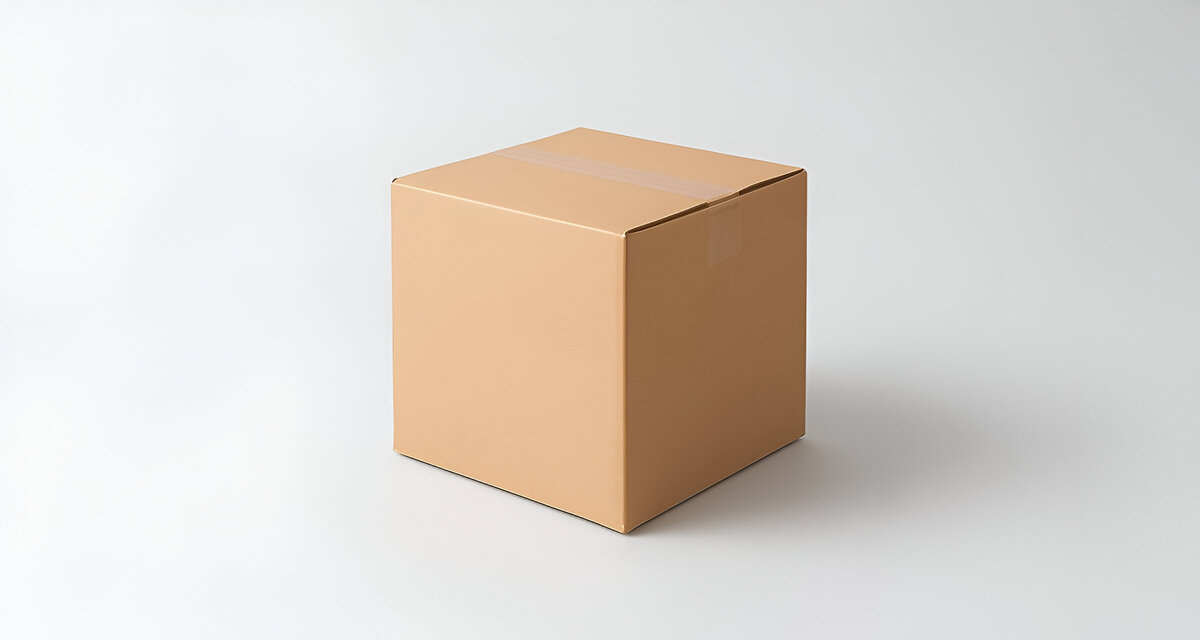
It is tempting to dismiss the cardboard box as a mundane object of no special artistry. Yet when looked at closely, the humble box reveals itself as a paragon of design: efficient, resilient, adaptive, expressive, and ubiquitous. Its story is one of invention by accident, adaptation by commerce, and reinvention by culture. Because it continues to solve real problems of packaging, transport, storage, branding, it remains not only relevant but essential.
The cardboard box is a true example of time-proof design, surviving every industrial shift with quiet elegance and intelligence.
Origins: From Paper to Box
The story of the cardboard box begins with the invention of paper in ancient China during the Han dynasty, around the 2nd century CE. Over time, papermakers developed thicker and sturdier forms of paper, eventually giving rise to what we now call cardboard. By the 17th century, artisans were already experimenting with stiffened paper materials for protective packaging.
The first recorded use of a paperboard box appeared in early 19th-century England, where manufacturers used them to package luxury goods and games. Although elegant, these early boxes lacked structural strength and were unsuitable for heavy shipping. A major breakthrough came with corrugation, a process that transformed simple paper into a resilient structural material.
In 1856, two English inventors patented a pleated paper used to stiffen hats, unknowingly laying the groundwork for modern corrugated packaging. In 1871, American inventor Albert Jones applied the same idea to create corrugated paperboard for protecting fragile items like glassware. His design, featuring a fluted layer sandwiched between flat sheets, offered exceptional strength, cushioning, and lightness. Soon after, others refined this into double-faced corrugated board, improving durability and versatility.
The next revolution arrived in 1890, when Robert Gair, a Brooklyn printer, accidentally discovered that cutting and creasing cardboard in one process allowed for flat, pre-cut blanks that could be folded into boxes. This innovation made it possible to mass-produce packaging efficiently while also printing directly onto the surface for branding and design.
By the early 20th century, corrugated fiberboard boxes had largely replaced heavy wooden crates. They were cheaper, lighter, recyclable, and easier to ship, marking a profound shift in global trade and logistics. What began as a paper experiment evolved into one of the most influential industrial designs in history, the timeless cardboard box.
Why the Cardboard Box Is Time-Proof
When a design is called time-proof, it means that it remains relevant, useful, and enduring across decades of change. The cardboard box fits this description perfectly, supported by several key characteristics that ensure its timelessness.
1. Simplicity and clarity of purpose
A box has a clear mission: it holds, protects, stacks, and delivers. Its geometry is simple yet endlessly adaptable. Every crease and flap has a reason. It’s a design distilled to pure function, with no unnecessary elements. That efficiency of purpose ensures its survival in every era.
2. Material intelligence
Cardboard—especially corrugated fiberboard—is an incredibly intelligent material. It is lightweight yet strong, made primarily from renewable sources, and can be recycled repeatedly. The balance between cost, weight, and protection remains unmatched. This makes the box both economically and environmentally sustainable, a dual achievement few materials can claim.
3. Adaptability and scalability
The genius of the box lies in its modularity. The same folding logic can be applied to a small jewelry case or a refrigerator carton. Designers can adjust wall thickness, flute size, or coating depending on purpose, but the fundamental geometry never changes. This makes it infinitely scalable.
4. Production and logistics efficiency
A cardboard box can be produced flat, shipped flat, and assembled instantly when needed. This simple property reduces storage space, shipping costs, and labor. Global logistics systems, from factories to warehouses to delivery trucks, are designed around box dimensions. The cardboard box is not only a design, it is the language of global commerce.
5. Communication and identity
The flat surfaces of a box make it the perfect canvas for branding and storytelling. Logos, product details, and color schemes can transform a simple box into a marketing instrument. The experience of opening a beautifully printed box has become part of modern consumer culture, especially in e-commerce. The moment of unboxing is now an emotional and visual ritual.
6. Sustainability and lifecycle
Cardboard is one of the world’s most recycled materials. It can be reused multiple times, composted, or repurposed. Designers have embraced this life cycle, ensuring that the box not only serves during transport but also leaves minimal trace afterward. Its recyclability and low carbon footprint secure its place in the future.
These qualities, simplicity, scalability, sustainability, and communication, make the cardboard box a time-proof masterpiece. It continues to evolve while retaining its essential form.
The Design Concept and Approach
The design of a cardboard box is guided by both structural logic and emotional clarity. Each choice, material thickness, fold line, closure method, embodies a philosophy of efficiency and purpose.
Minimalism with function
The ideal box embodies the principle of “form follows function.” There are no superfluous details. Every slot, crease, or tab exists for a reason: to strengthen, to fold, or to close. The beauty of a well-designed box lies in its restraint.
Engineering through geometry
A box is a three-dimensional expression of two-dimensional logic. A designer begins with a flat blank and imagines how folds become planes, and how planes meet to create strength. Corrugation adds a hidden internal architecture, tiny arches that distribute pressure evenly, making cardboard deceptively strong.
Standardization and modularity
From postal cartons to warehouse trays, boxes follow standard proportions to fit on pallets, shelves, and trucks. This modular discipline saves countless hours and resources. Designers work with these standards like composers work with rhythm, within limits, they create infinite variation.
User experience and unboxing
Modern packaging design doesn’t stop at shipping; it extends into experience. Where do you open it? What does the inside reveal? How does it feel to unfold the flaps? The “unboxing” moment connects physical design to emotional storytelling. A successful box makes this experience effortless and intuitive.
Sustainable intelligence
Contemporary designers are rethinking every layer of the box. Can we use plant-based coatings instead of plastic films? Inks be water-based? Can the structure eliminate glue altogether by using clever interlocks? These questions shape the next era of cardboard innovation.
Brand expression
The box speaks for the brand. Its proportions, weight, typography, and colors carry the company’s identity. Even minimal or recycled boxes convey messages of honesty, transparency, or environmental consciousness. The cardboard box, simple as it seems, is an ambassador of values.
The Future of the Cardboard Box
The cardboard box may seem complete, but its evolution continues. It adapts not by changing its essence, but by expanding its intelligence and ecological harmony.
Smart and connected boxes
With advances in technology, boxes can now include embedded sensors, QR codes, or RFID tags to track contents and conditions. They can signal humidity, temperature, or tampering, all without altering their physical simplicity. The box becomes a participant in the Internet of Things.
Material innovation
Researchers are developing bio-based fibers and nano-cellulose reinforcements to make cardboard stronger and more water-resistant without using plastic. The idea is not to replace the box, but to make it smarter, greener, and stronger.
Customization on demand
Digital manufacturing allows brands to produce boxes with custom dimensions and designs instantly. Small businesses can order precise quantities of perfectly fitting boxes, reducing waste. The flexibility of the form ensures it remains relevant in both mass production and bespoke craftsmanship.
Reusability and transformation
Some modern boxes are designed for multiple uses. They unfold into storage containers, display stands, or even furniture. Children turn them into castles and robots. This second life quality adds emotional value and extends the object’s lifespan.
Integration with automation
As logistics become more robotic, the box remains the most compatible shape for machines to handle. Conveyor belts, scanners, and robotic arms all “speak” in boxes. In this way, the cardboard box is not just surviving automation, it is shaping it.
Cultural permanence
Beyond technology, the cardboard box holds a place in our collective imagination. It is associated with movement, discovery, surprise, and transformation. From a child’s playhouse to an artist’s sculpture, it represents possibility. That emotional resonance ensures that even in a digital future, the cardboard box will still matter.
The Box as a Mirror of Civilization
The cardboard box is a reflection of our relationship with material culture. It has accompanied every industrial revolution, every migration of goods, and every household move. Bridging the gap between the virtual and the tangible, between commerce and creativity.
Functions quietly, efficiently, and universally, adapting across technologies, economies, and generations. It is both a tool and a metaphor, a container for ideas as much as for objects.
When we tear open a box today, we participate in a century-long design conversation. The fold in your hands carries the fingerprints of inventors, printers, and dreamers who believed in making life more organized and connected.
Lessons from a Timeless Design
- Function is beauty. The cardboard box is proof that purpose and elegance can coexist without ornament.
- Simplicity endures. Designs that rely on essential geometry resist obsolescence.
- Adaptation ensures survival. The box has evolved through new materials and technologies without losing its identity.
- Sustainability is longevity. Eco-friendly design is not a trend, it is the foundation of durability.
- Design is invisible when it works perfectly. The cardboard box succeeds because it doesn’t demand attention, it just performs.
Final Thoughts: The Humble Genius of the Cardboard Box
The cardboard box is a masterclass in design thinking, a solution that has transcended its humble beginnings to become a universal tool of modern life. It embodies simplicity, sustainability, and adaptability. It is the unspoken infrastructure of global trade, the invisible framework of e-commerce, and the enduring symbol of practicality.
To call it timeless is no exaggeration. The cardboard box has outlasted countless industrial trends and will continue to evolve alongside human ingenuity. It may become smarter, cleaner, or more connected, but its essence, a folded structure that protects and communicates, will remain unchanged.
In every home, warehouse, and shipment, the box continues its silent service. It is one of the most democratic designs ever created: accessible, functional, recyclable, and endlessly creative. The cardboard box is not just packaging, it is a portrait of design perfection that proves that true innovation never expires.