
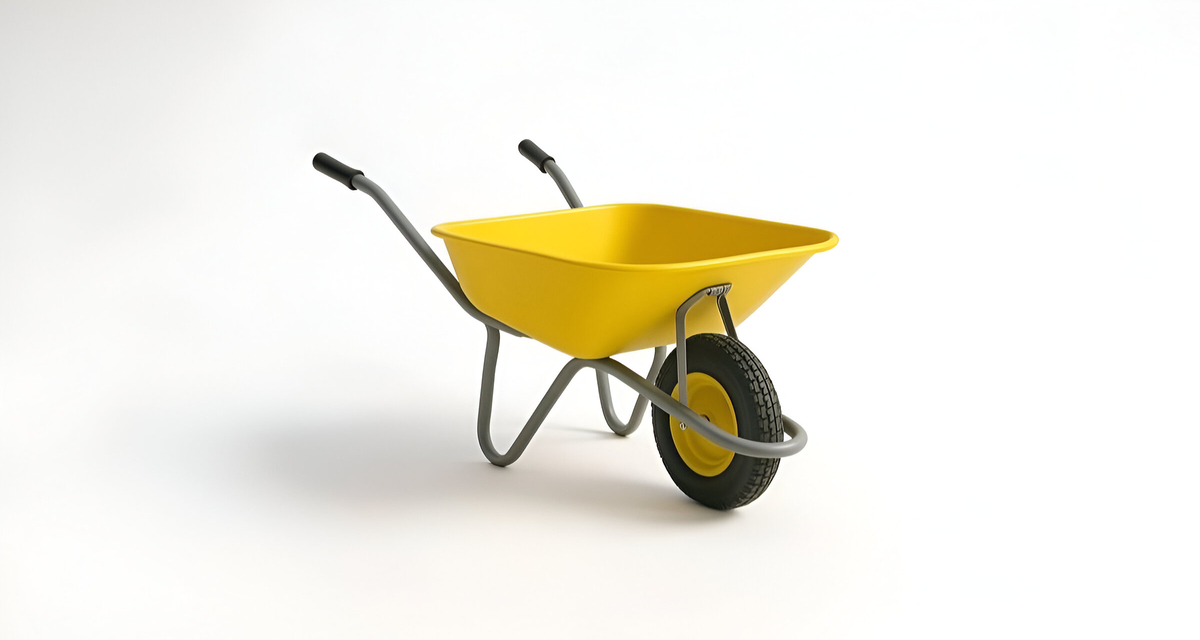
Among the tools that have managed to carry the weight of civilizations, stands the Hand Wheel Barrow, a simple yet transformative invention that remains relevant across centuries, cultures, and continents. While its structure may seem humble, the hand wheel barrow is one of the most efficient, time-proof, and universally adaptable designs humanity has ever created.
From its roots in ancient innovation to its enduring role on job sites and in backyards, this tool tells a story of practical brilliance.
Hand Wheel Barrow Origins: Innovation in Motion
The history of the hand wheel barrow goes back over 2,000 years, making it one of the oldest transportation tools designed for individual use. Though variations emerged in different regions, China is widely credited with the earliest development. Records point to its use around 118 AD, during the Han Dynasty. Historical documents and art show large central-wheel carts that carried both people and goods.
In contrast to Western models, Chinese wheelbarrows placed the wheel at the center beneath the load. This layout balanced the weight over the wheel, reducing strain on the user and improving efficiency. It was a brilliant design that combined logic with real-world practicality.
This invention wasn’t just for agriculture. It also served in construction, trade, and even military operations, showing its wide range of applications. It soon proved to be more than a tool, it became an essential extension of human effort.
By the 12th century, the concept had spread to Europe. Medieval manuscripts depict field workers and city laborers using early Western-style versions. These typically had a front-mounted wheel and were built from wood. The structure may have shifted, but the core purpose remained the same: make heavy transport easier and more controlled.

Design That Endured
The beauty of the hand wheel barrow lies not in complexity, but in functional logic. It merges the mechanical advantages of both the lever and the wheel, two classical simple machines. When someone lifts and pushes a wheelbarrow, they use the wheel to reduce friction and the handles as levers to lift the load.
The hand wheel barrow basic idea has not changed in centuries. And for good reason, it works remarkably well.
Over time, materials evolved. Builders moved from wood to steel, rubber, and high-impact plastics. Yet, the form stayed largely the same. Handle length, wheel placement, and tray depth all reflect smart, proven design principles that have lasted generations.
Its continued use today proves the design’s endurance. Even in an age of engines and automation, the wheelbarrow holds its ground on farms, construction sites, and gardens. It remains a quiet champion of manual work.
Why the Hand Wheel Barrow is Time-Proof
Some inventions solve a problem so well they become timeless. The hand wheel barrow is one of those rare tools.
- Ergonomic advantage: Its structure reduces strain on the body. The wheel bears most of the weight, minimizing effort.
- Versatility: Whether you’re moving bricks, firewood, soil, or produce, it adapts to the task.
- Low cost: Unlike powered machines, wheelbarrows are affordable, need no fuel, and require little maintenance.
- Compact and durable: They take up minimal space and can last for decades if made with quality parts.
- Energy-independent: No batteries, fuel, or electricity needed. It performs anywhere, anytime, powered by human effort.
The kind of rare resilience. And it’s exactly what makes the design so enduring.
Notable Models Through History
Over centuries, different versions of the hand wheel barrow stood out for their function and innovation. Each one reflects the time and culture that shaped it.
1. Chinese Central Wheel Barrow
The central-wheel model from ancient China was a masterstroke in balance. With its wheel directly under the load, it allowed one person to carry heavy goods with stability, even passengers. This version traveled long distances with ease.
2. Medieval European Barrow
This model had a front wheel, wooden tray, and two handles. It was common among laborers, stonemasons, and farmers. Though simpler than its Chinese cousin, it was rugged and easy to build, making it a favorite in medieval towns.
3. WWII-Era Steel Barrow
During World War II, barrows made from steel and rubber were mass-produced for construction and military work. Their solid construction helped transport tools, equipment, and materials under harsh conditions. Many of these are still found today in working order.
4. Modern Contractor Barrow
Today’s high-performance models use pneumatic wheels, powder-coated steel, and ergonomic grips. Though upgraded in materials, the design remains rooted in centuries of proven performance.
A Design That Speaks Through Function
The hand wheel barrow is a design where form follows function. Its appeal isn’t in style or flair, it’s in purpose. Every curve, angle, and connection exists to make movement more efficient.
In industrial design, such tools are often called honest designs. They don’t pretend to be more than they are, yet they accomplish more than expected. The tray cradles weight, the wheel balances motion, and the handles give control. All parts serve the user.
Modern designers admire the wheelbarrow’s simplicity. Artists, architects, and creators have used it as a symbol of effort, humility, and resilience. Its presence in art and storytelling adds another layer to its legacy.

Hand Wheel Barrow Cultural Significance and Symbolism
Across the globe, the hand wheel barrow has become more than a tool, it’s part of the cultural landscape. It shows up in stories, rituals, and images.
In literature and film, it often represents working-class grit or the quiet dignity of labor. In visual art, it’s shown in fields, ruins, or city alleys, always as a companion to human perseverance.
Some communities have even integrated it into ceremonies. In traditional Korean weddings, the groom may carry the bride in a wheelbarrow to symbolize commitment and readiness for shared responsibility. In parts of Africa, wheelbarrows help families gather and transport goods daily. The act itself becomes a routine of care and connection.
Into the Future: Why It Still Matters
Despite new machines and advanced tools, the hand wheel barrow holds a place the future won’t erase. Here’s why:
It gives power to individuals, not just industries. One person can move weight that would otherwise need a team. When disasters strike or energy systems fail, wheelbarrows remain reliable. They’re seen in cleanup efforts, refugee camps, and rebuilding zones, helping carry water, food, and supplies when all else breaks down.
In today’s shift toward sustainability and local production, the wheelbarrow feels more relevant than ever. Urban farmers, green builders, and eco-conscious communities continue to use them daily. They’re also a go-to tool for DIY gardeners and home renovators.
Material innovation helps too. Modern barrows now include airless tires, recycled plastic trays, and corrosion-resistant steel. These upgrades extend their lifespan while lowering environmental impact.
Hand Wheel Barrow Legacy Will Keep Rolling
Few inventions carry the weight of both history and purpose the way the hand wheel barrow does. It’s helped move stone for castles, harvests from fields, and building blocks for homes. It continues to move mulch in backyards and bricks on skyscrapers.
The hand wheel barrow is at its heart, a tool that keeps us grounded. It proves that brilliance doesn’t always need reinvention. Sometimes, it only needs to be built well, used well, and valued for what it offers.
The hand wheel barrow is more than a cart. It’s a bridge between past and present, a partner in labor, and a masterpiece of usable design. As long as there is work to do and something to carry, it will keep rolling forward.