
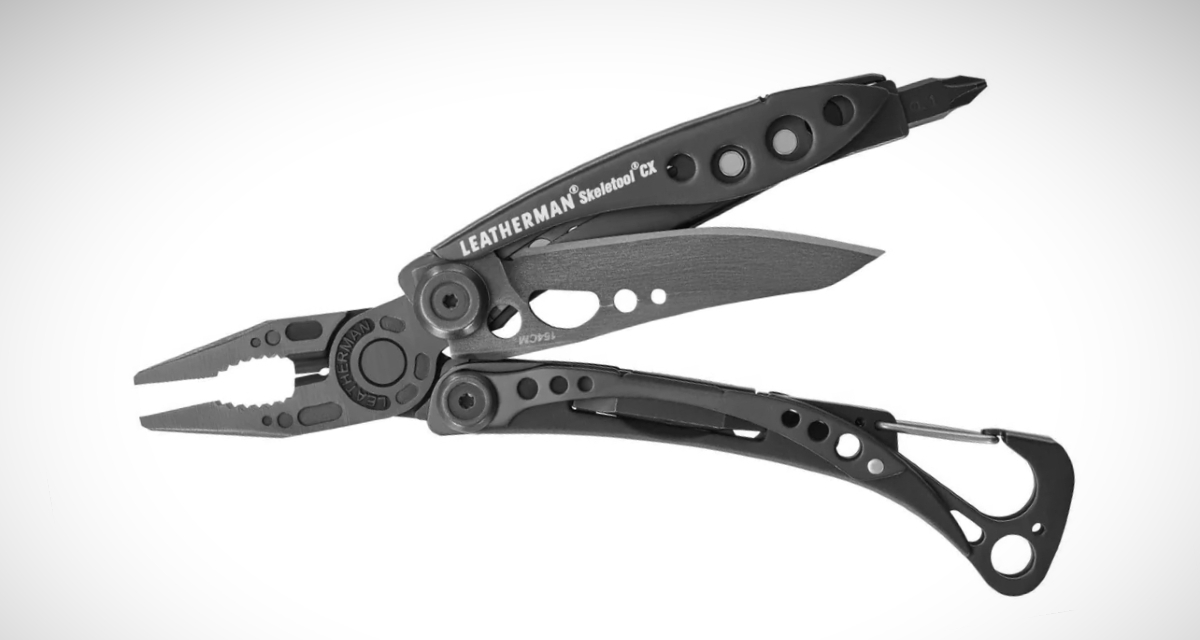
Most tools are bound by the time and culture that produced them. But Leatherman multi-tools are a rare exception, a product of necessity that became a global symbol of preparedness, problem-solving, and intelligent design.
Whether clipped to a firefighter’s belt, stashed in a backpacker’s gear, or tucked into a drawer for everyday fixes, the Leatherman is more than a tool. It’s a philosophy in stainless steel. This article explores the history, design approach, and enduring legacy of Leatherman multi-tools, revealing why they’re not just useful but also time proof.
From Frustration to Invention: Birth of Leatherman Multi-Tools
The Leatherman story begins not in a high-tech lab or design studio, but on the road. In 1975, Tim Leatherman, an Oregon mechanical engineering graduate, set off with his wife on a budget trip through Europe in a beat-up Fiat. Armed with nothing more than a pocketknife and a head full of DIY spirit, he soon discovered a recurring problem, the knife wasn’t enough.
The car broke down. Pipes leaked in hotel rooms. Everyday obstacles demanded tools that a knife alone couldn’t provide. What he needed, and what didn’t exist yet, was a portable toolkit that combined pliers, screwdrivers, blades, and more, into a single, foldable unit.
That idea stuck with him. For the next eight years, he developed prototypes in his garage, refined mechanisms, and pitched his vision in a multi-tool compact enough for a pocket, but capable enough for serious work.
In 1983, after countless rejections, Leatherman finally launched the PST (Pocket Survival Tool). It was a 14-function wonder wrapped in 4 inches of folded steel. The rest is history.
Learn more about Leatherman history in this short documentary:
Why Leatherman Is a Timeproof Design
So what makes the Leatherman design immune to obsolescence? Why does it continue to thrive in a world filled with tech gadgets, apps, and automation?
Let’s break down the essential qualities that make Leatherman a design archetype, a solution that’s as relevant today as it was in 1983.
1. Designed Around a Real Human Need
The most enduring designs solve universal problems. Tim Leatherman didn’t design a tool for a niche market. He built a solution to an everyday human experience, the need to fix, adjust, cut, grip, or open something on the fly.
These tasks don’t go away with time. They’re not bound to specific technologies. As long as there are loose screws, broken parts, or tangled wires, the Leatherman is needed.
2. Mechanical Intelligence
Leatherman tools are built on pure mechanical logic. There are no batteries, no updates, no fragile digital components. Just levers, pivots, locks, springs, and precision metalwork, all things that appeal to the engineer in everyone. This simplicity gives it longevity.
The tool doesn’t ask anything from you except your hands. It’s analog excellence at its best.
3. Modular Thinking
Each Leatherman is modular in spirit, not just in its tools, but in how users adapt it. Need to cut fishing line? Use the scissors. Fix a bike on the trail? Flip out the hex bit. Open a can during a power outage? There’s a tool for that too.
This makes Leatherman infinitely adaptable. It becomes part of someone’s lifestyle, not just their toolkit.
4. Form That Honors Function
Every fold, curve, and click in a Leatherman has a purpose. It’s not a decorative object. Its form is defined entirely by how it works, which gives it a visual honesty that industrial designers dream of achieving.
When you hold a Leatherman, you don’t just feel the object. You feel confidence.
Key Moments in Leatherman History
To understand how Leatherman became a global name, here are some pivotal milestones in its evolution.
1983: The Launch of the PST
The Pocket Survival Tool debuts. It includes 14 tools, including pliers, screwdrivers, a knife, and a file. Tim sells 30,000 units in the first year, more than double his forecast.
1994: The Wave Hits
The original Wave is released, a multi-tool with accessible features that can be operated with one hand. It becomes a bestseller and defines the modern multi-tool standard.
2001–2010: Expansion and Innovation
Leatherman begins introducing tools for specific audiences, like the Surge (for heavy-duty use), the Skeletool (minimalist design), and the MUT (military-grade tool). The brand becomes known for specialization without compromise.
2015: The Tread Breaks Convention
In a bold experiment, Leatherman launches the Tread, a wearable multi-tool bracelet. Each link contains tools like hex drives and screwdrivers. While controversial, it expands the brand’s design boundaries.
2020s: A Focus on Everyday Carry
With the rise of EDC (Everyday Carry) culture, Leatherman continues to evolve. Models like the Free series introduce magnetic architecture for easier deployment, proving that even classics can evolve.
Iconic Leatherman Models That Prove Timelessness
Let’s spotlight a few Leatherman multi-tools that show how design rooted in purpose can transcend generations.
1. Leatherman PST (Pocket Survival Tool)
The original. A 1980s design that still holds up today. No unnecessary flourishes. Just compact, rugged functionality. It’s now a collector’s item, yet still completely practical.
2. Leatherman Wave+
Probably the most popular Leatherman ever made. It hits the perfect balance between size, weight, and utility. The outside-accessible blades and one-handed operation make it a favorite for adventurers, tinkerers, and professionals alike.
3. Leatherman Charge TTi
The premium workhorse. Titanium handles, replaceable wire cutters, and an upgraded blade make it a tool for life. Ideal for those who want reliability and a touch of elegance in their gear.
4. Leatherman Signal
Designed for the outdoor survivalist, the Signal includes a fire-starting rod, emergency whistle, and hammer. It blends the classic Leatherman DNA with tools made for the wild.
5. Leatherman Free P4
A modern reinterpretation of the classic format, the Free P4 uses magnets to provide smoother, faster tool access. It represents how even timeproof designs can improve without losing identity.
How Leatherman Multi-Tools Will Stay Relevant in the Future
In a world moving toward automation and digital everything, why will Leatherman remain essential?
1. Physical World, Physical Tools
No matter how smart devices become, the physical world still needs manual intervention. A loose bolt won’t tighten itself. A sealed box won’t open with an app. The Leatherman stands firm in this reality.
2. Rise of Self-Reliance Culture
From urban preppers to vanlifers to DIY homeowners, there’s a cultural shift toward self-reliance. People want to solve their own problems. Leatherman isn’t just a product for this movement, it helped shape it.
3. Anti-Disposable Ethos
In a disposable age, Leatherman is a countercultural object. It’s built to last. It’s repairable. It’s designed to be passed down. These values will only grow in importance as sustainability becomes central to design.
4. Design Education Standard
Leatherman multi-tools are now used in design schools and engineering classrooms as case studies in perfect product development. They’re not just tools, they’re design language.
What Designers Can Learn From Leatherman Multi-Tools
Leatherman isn’t just a company. It’s a lesson in design courage.
- Solve real problems before chasing aesthetics.
- Let function dictate form, but do it with refinement.
- Build with care and longevity in mind, not trends.
- Stay focused, but be ready to evolve.
The success of Leatherman isn’t luck. It’s the result of a singular vision, refined over decades, trusted by people in moments that matter, from wilderness rescues to fixing a kid’s bike.
Final Thoughts: A Tool That Becomes Part of You
In the end, a Leatherman is more than a multitool. It’s a personal ritual. The feel of it unfolding in your hand. The click of the blade locking in. The subtle sense of readiness it gives you. It doesn’t distract you with features you don’t need. It empowers you with the ones you do.
As long as there are humans trying to fix what’s broken, build something better, or just be ready for whatever, Leatherman will be by their side.
It’s not nostalgia. It’s not a trend. It’s not even a brand. It’s a design that earned its place in time, and will stay there, far into the future.