
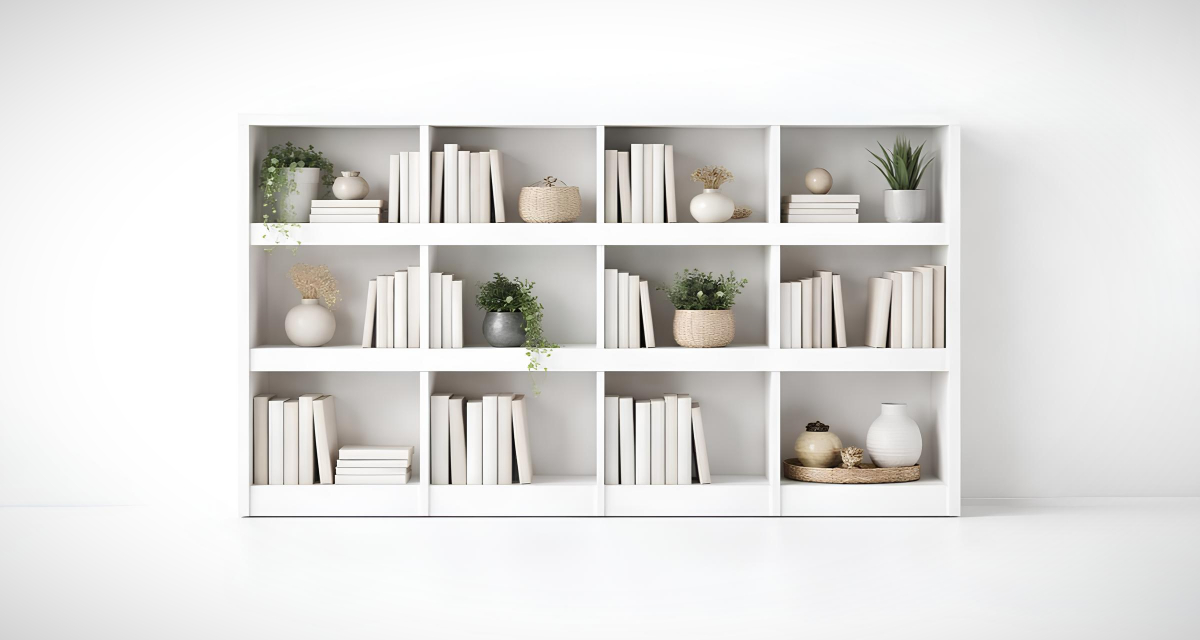
The BILLY Bookcase stands in student apartments, family homes, libraries, studios, and offices across continents. It is often unnoticed, yet deeply familiar. This is the paradox of truly successful product design. When design works perfectly, it fades into everyday life while shaping it at the same time.
The BILLY Bookcase is not only a piece of furniture. It is a cultural artifact, a design philosophy made visible, and one of the most influential objects in the history of industrial design. Its story reveals how thoughtful constraints, democratic ideals, and an unwavering focus on real human needs can create a design that remains relevant for decades and will continue to do so well into the future.
The Origins of the BILLY Bookcase
The BILLY Bookcase was introduced by IKEA in 1979. It was designed by Gillis Lundgren, one of IKEA’s earliest and most influential designers. At the time, IKEA was already known for its flat pack approach, yet shelving solutions were either expensive, bulky, or visually heavy.
Lundgren noticed a simple but persistent problem. People owned books, records, and personal objects, but affordable storage that adapted to different homes was rare. Many bookcases were fixed in size and style. Others were costly and difficult to transport. The solution needed to be efficient, flexible, and accessible.
The result was BILLY. A tall, narrow, rectangular bookcase built around a clear idea. Storage should be adaptable. Furniture should be easy to move. Design should be affordable without feeling temporary.
From its earliest version, the BILLY Bookcase design was guided by practicality rather than trends. This choice would prove decisive.
Design Concept and Approach
At its core, the BILLY Bookcase follows a principle that has defined Scandinavian design for generations. Form follows everyday life.
The structure is deliberately simple. Vertical sides. Adjustable shelves. A strong back panel for stability. No decorative flourishes that could age quickly. No unnecessary complexity. Each decision was made to support function, cost efficiency, and long term usability.
This simplicity was not accidental. Instead, it was the result of a deliberate strategy.
A reduced number of components allowed IKEA to optimize manufacturing and packaging. Neutral proportions helped the bookcase blend naturally into almost any interior. Adjustable shelves gave users the freedom to adapt BILLY as their needs evolved over time.
This is where the design reveals its intelligence. The modular bookcase concept empowers users rather than prescribing behavior. BILLY does not dictate what should be stored. Books, vinyl records, toys, plants, or tools all belong equally.
The design invites personalization. Over time, doors, extensions, finishes, and accessories were added, expanding the system without altering its core identity.
Flat Pack Furniture and Democratic Design
The BILLY Bookcase is inseparable from the philosophy of flat pack furniture. IKEA’s approach was never about reducing quality. It was about reducing barriers.
Flat pack design lowers transportation costs, minimizes storage space, and allows customers to participate in the final assembly. This participation creates a subtle emotional connection. Building BILLY becomes part of its story.
This idea connects directly to the concept of democratic design, a central pillar of IKEA. Democratic design balances five elements. Function, form, quality, sustainability, and low price.
BILLY succeeds because none of these elements dominate the others. The design is visually quiet but not dull. The materials are cost effective but durable. The price is accessible without feeling disposable.
As a result, millions of people who might never hire a designer still experience the benefits of good design in their daily lives.
Historical Influences and Design Heritage
The visual language of the BILLY Bookcase reflects deeper roots in Scandinavian design history. Early modernist furniture from the Nordic countries emphasized clarity, lightness, and honesty of materials.
Designers like Alvar Aalto and Bruno Mathsson rejected ornament for ornament’s sake. They believed furniture should support living, not compete with it. BILLY carries this lineage forward in a contemporary, industrial context.
The vertical rhythm of the shelves echoes traditional library shelving. The restrained proportions recall early twentieth century modernism. Yet the object never feels academic or elitist.
This balance between heritage and mass production is rare. It positions BILLY as both familiar and modern, rooted yet flexible.
Why the BILLY Bookcase Is Time Proof
To understand why the BILLY Bookcase is time proof, it helps to look beyond style and into systems.
Trends change quickly. Colors, materials, and decorative details rise and fall. BILLY avoids these traps by focusing on structure and use rather than surface fashion.
The design is intentionally neutral. White, wood tones, and darker finishes act as backgrounds rather than statements. This neutrality allows BILLY to coexist with evolving interiors without visual conflict.
Another key factor is scalability. The BILLY system grows with the user. Extensions allow it to reach the ceiling. Additional units allow entire walls to become libraries. Doors transform it from open storage to a more formal cabinet.
Because it adapts, it remains relevant.
Finally, durability matters. Many BILLY units last decades. They move from dorm rooms to first apartments, from offices to family homes. This continuity builds emotional value, which is often overlooked in discussions of industrial design.
Cultural Impact and Global Presence
The BILLY Bookcase has become one of the best selling furniture products in history. It is estimated that a BILLY is sold somewhere in the world every few seconds.
This scale has cultural consequences. BILLY appears in films, television shows, social media, and everyday photography. It has become a visual shorthand for modern domestic life.
Unlike iconic design objects that remain confined to museums or collectors, BILLY lives among people. Its cultural power comes from participation, not exclusivity.
This presence has also made it a canvas for creativity. People paint it, hack it, modify it, and transform it. Online communities share ideas that extend BILLY far beyond its original use.
A design that invites reinterpretation stays alive.
Sustainability and Evolution Over Time
The design evolution of the BILLY Bookcase reflects changing priorities in production and sustainability.
Materials have been refined to reduce waste and improve efficiency. Manufacturing processes have been optimized to lower environmental impact. Packaging has become more compact. Wood sourcing has shifted toward responsible forestry.
These changes are mostly invisible to users, yet they ensure that the design remains viable in a changing world.
Importantly, IKEA has resisted the temptation to redesign BILLY dramatically. Instead, the company improves quietly. This respect for continuity reinforces trust.
A product that changes too much risks losing its identity. BILLY evolves without abandoning itself.
BILLY as a Design System, Not a Product
One of the most powerful ideas behind the BILLY Bookcase is that it is not a single object. It is a design system.
Systems endure longer than standalone products. They allow variation without chaos. They support customization without fragmentation.
BILLY can be minimal or expressive. It can disappear into a wall or define a room. It can serve a child, a collector, or a professional.
This systemic thinking aligns with contemporary design challenges. As living spaces become smaller and more flexible, furniture must do more with less.
BILLY anticipated this reality decades ago.
The Future of the BILLY Bookcase Design
Looking ahead, the relevance of the BILLY Bookcase design is likely to increase rather than fade.
Urban living continues to demand efficient storage. Hybrid work environments blur the line between home and office. Digital life has not eliminated physical objects. If anything, books and meaningful possessions have become symbols of identity.
BILLY fits naturally into this future. Adaptability allows it to support changing lifestyles, while affordability aligns well with periods of economic uncertainty. A neutral visual language enables the bookcase to complement both physical and digital aesthetics with ease.
Future iterations may include smarter materials, improved sustainability metrics, or integration with new living patterns. Yet the core idea will remain.
A simple structure. Human centered design. Honest function.
Why Designers Still Study the BILLY Bookcase
For designers, the BILLY Bookcase offers enduring lessons.
- First, constraints are creative tools. Limited materials and strict cost targets sharpen ideas rather than weaken them.
- Second, longevity comes from restraint. Avoiding visual excess allows a design to age gracefully.
- Third, real success is measured in use, not awards. BILLY’s true achievement is not critical acclaim but daily relevance.
Design education often celebrates the extraordinary. BILLY reminds us that the ordinary, when done well, can be extraordinary over time.
Final Thoughts
The BILLY Bookcase is more than a popular IKEA product. It stands as a masterclass in timeless design, industrial thinking, and democratic values. A clear vision runs through its history, while its form bridges both past and future. Seen in millions of homes worldwide, it proves that good design does not need to shout.
By staying focused on human needs, adaptable systems, and honest construction, BILLY has earned its place as one of the most important furniture designs of the modern era.
And as long as people need space for books, ideas, and personal meaning, the BILLY Bookcase will remain quietly, confidently relevant.