
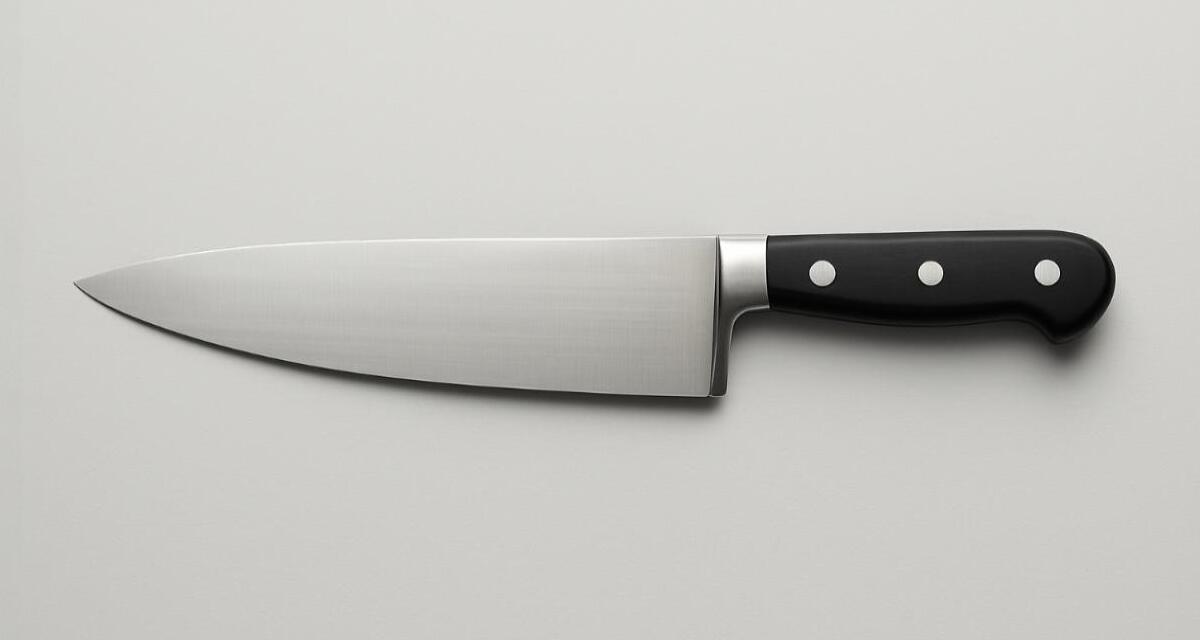
The chef’s knife it’s an extension of the cook’s hand, a symbol of craftsmanship, and a design that has stood the test of time. Across centuries and civilizations, the evolution of this blade tells a story of necessity, culture, and innovation. While technology constantly reshapes the world, the fundamental form of the chef’s knife remains largely unchanged.
But why? What makes it such a timeproof design? Let’s explore the origins, evolution, and future of this culinary icon.
The Ancient Origins of the Chef’s Knife
Before the modern chef’s knife emerged, humanity was already experimenting with cutting tools. Early flint knives date back over 2.5 million years, crafted by early hominins like Homo habilis for survival, hunting, and food preparation. By 3000 BCE, civilizations such as the Egyptians and Mesopotamians developed bronze knives, which were stronger and more durable than stone tools.
During the Iron Age (1200–500 BCE), advancements in metallurgy allowed blacksmiths in regions like China and Europe to forge iron knives, making them sharper and longer-lasting. The Chinese Dao knife (circa 200 BCE) became a widely used kitchen tool, laying the groundwork for the development of multipurpose kitchen knives.
By the Middle Ages (5th–15th century CE), blacksmiths in Europe and Asia refined knife-making techniques. In Japan, samurai swordsmiths applied katana-forging techniques to kitchen knives, producing extremely sharp and precise blades. In Europe, trade routes helped spread forged steel knives, particularly in Solingen, Germany, and Thiers, France, two cities that would later become hubs for knife manufacturing.
The Modern Knife: A Marriage of Form and Function
The modern chef’s knife as we know it today emerged in the 18th and 19th centuries, particularly in Germany and France. The introduction of high-carbon steel allowed for sharper and more durable blades, giving rise to the two dominant styles of chef’s knives:
- The German-style chef’s knife (see: Wüsthof or Zwilling J.A. Henckels) – Originating in Solingen, Germany, by the late 18th century, this style featured a curved blade designed for a rocking motion, ideal for chopping and mincing.
- The French-style chef’s knife – Developed around the same time, particularly in Thiers, France, this design featured a straighter edge, allowing for precise slicing and controlled movements.
Meanwhile, in Japan, the Gyuto knife (meaning “cow sword”) emerged in the late 19th century as a response to Western chef’s knives. Crafted using traditional katana-style techniques, the Gyuto blended Japanese precision with European versatility, making it a global favorite among professionals.
By the 20th century, stainless steel revolutionized knife production, making knives more resistant to corrosion while maintaining sharpness. Knife-making brands like Victorinox (1884), Shun (2002), and Masamoto (late 19th century) continued to refine the chef’s knife, ensuring its enduring presence in both professional and home kitchens.
Why the Chef’s Knife is a Timeproof Design
The chef knife has achieved timeless status because it fulfills the key principles of great design:
- Versatility – A single chef’s knife can perform 90% of kitchen cutting tasks.
- Ergonomics – A well-balanced knife reduces fatigue, making it an effortless extension of the hand.
- Material Excellence – From high-carbon stainless steel to Damascus steel, the right materials enhance durability and precision.
- Cultural Adaptability – Whether in a Michelin-starred kitchen or a home cook’s counter, the chef’s knife seamlessly fits into every cooking tradition.
- Aesthetic Simplicity – The combination of a refined handle and a perfectly tapered blade creates a visually stunning yet purely functional object.
In a world obsessed with disposable trends, the chef knife stands as a counterpoint: enduring, irreplaceable, and perfected by history.
Timeless Chef’s Knives That Have Defined Generations
Some knives have gained legendary status, becoming benchmarks of excellence:
- Wüsthof Classic 8-Inch Chef’s Knife – A German workhorse known for durability and balance.
- Victorinox Fibrox Pro 8-Inch Chef’s Knife – A budget-friendly yet professional-grade tool.
- Shun Classic 8-Inch Chef’s Knife – A Japanese masterpiece with a razor-sharp edge.
- Misono UX10 – A Japanese-European hybrid with superior edge retention.
Each of these knives showcases timeless design, proving that the best tools remain unchanged for a reason.


The Future of the Chef’s Knife
While new materials, ergonomic enhancements, and sharpening techniques continue to refine the chef’s knife, its core design will likely remain unchanged. However, technological advancements will play a role in enhancing durability, usability, and maintenance.
- Advanced Materials – Future chef’s knives may incorporate nanostructured alloys or graphene-based materials that provide even greater strength, sharpness, and resistance to wear.
- Self-Sharpening Technology – Some companies are experimenting with edge-retention coatings that reduce the need for frequent sharpening, or knife blocks that automatically hone the blade every time it is inserted.
- Smart Knives – AI and IoT (Internet of Things) could lead to knives that track blade sharpness, cutting pressure, and even suggest sharpening intervals via a connected app.
- Sustainable Production – As environmental concerns grow, knife manufacturers are shifting toward recyclable steel, biodegradable handle materials, and carbon-neutral manufacturing processes to minimize their ecological footprint.
- Personalization & Customization – 3D printing and CNC machining allow for custom-fit handles, specialized blade geometries, and engraving, making the chef’s knife even more tailored to individual chefs.
Even in a futuristic world of automation and high-tech kitchens, the human connection to a well-balanced blade will never fade. Cooking is an art and ritual, and the chef knife will always be the trusted tool that bridges raw ingredients to culinary masterpieces.
Final Thoughts: The Blade That Stands the Test of Time
The chef’s knife is not just an essential utensil, it’s an enduring piece of human history. From prehistoric blades to high-carbon steel masterpieces, its form has remained largely the same because it works flawlessly. A rare blend of simplicity and sophistication, it continues to be the ultimate kitchen companion for chefs worldwide.
Whether you’re an amateur cook or a seasoned professional, investing in a high-quality chef’s knife means holding a piece of history in your hands, one that will cut through generations to come.