
From ancient temples in Egypt to modern runways and drag stages, the folding hand fan has remained an enduring symbol of function, style, and cultural meaning. In this expansive exploration, we uncover the rich history, ingenious design principles, and ever-relevant timelessness of this exceptional object.
Join us on a journey through millennia of cooling innovation, crafted with creativity, rich human storytelling, and a deep reverence for one of the world’s most iconic objects.
Folding Hand Fan Origins & Early Heritage
Ancient Egypt & Ritual Origins
Hand fans first emerged approximately 4,000 years ago in Egypt, where they weren’t merely cooling implements but ceremonial symbols of authority. Tutankhamun’s tomb revealed two ornate fans, one ebony with gold, another with ostrich plumes, affording the Pharaoh both comfort and prestige. These fans were large, fixed, and often held by servants, representing divine power.
Greece & Rome: Practicality Meets Prestige
By the 4th century BCE, the Greeks and Romans had adopted fans, known as rhipis, serving domestic, culinary, and ritual functions. Fan imagery appeared in mosaics and sculptures, used both by men and women, signifying taste and practicality.
Asia: The Birthplace of the Folding Fan
The folding hand fan truly came into existence in Japan between the 6th and 9th centuries, with two compelling origin stories. One attributes the design to the wings of a bat, the other links it to mokkan (wooden tablets tied by a rivet) that bureaucrats used. Either way, this was no small invention: it was portable, mechanically refined, and unlike anything that had existed.
This Japanese marvel soon spread to China around the year 988 CE, gifted to the Chinese court and integrated into ceremonial and artistic practices. The Chinese called them “Japanese fans” (tuan-shan), recognizing their foreign ingenuity.
Folding Hand Fan Anatomy & Design: Why Is So Ingenious
Structural Simplicity, Mechanical Brilliance
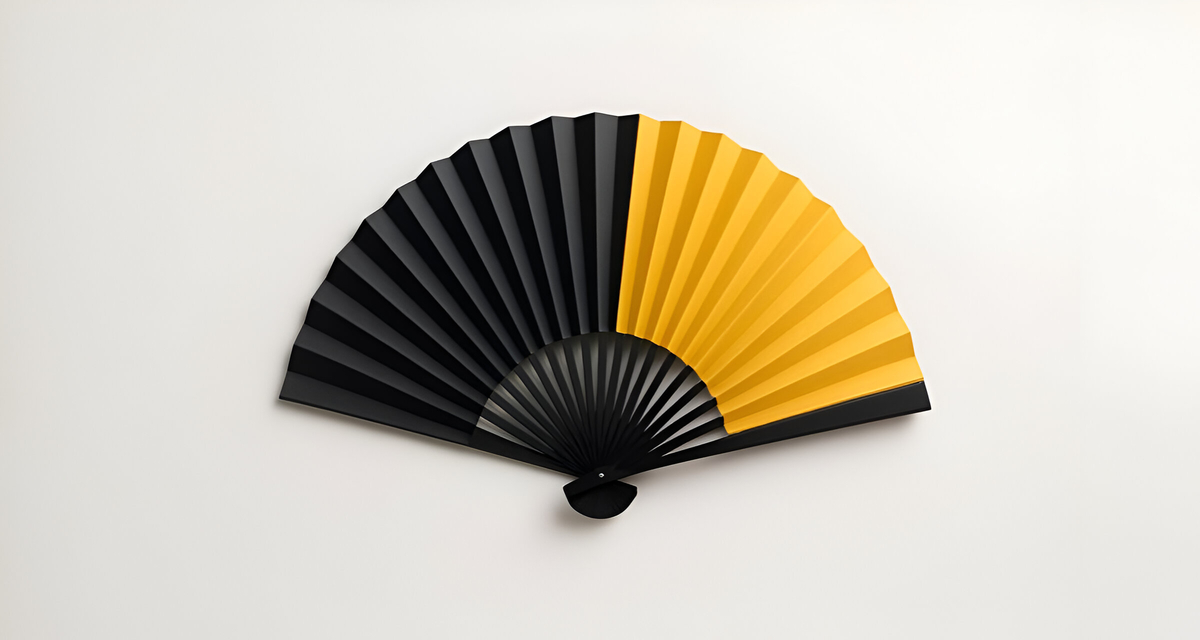
A typical folding hand fan is composed of sticks or ribs, two thicker guards, and a pleated leaf made from paper, silk, or other materials. These elements pivot around a single rivet, allowing the folding hand fan to fold neatly and open with dramatic flair.
This movement, a gentle sweep of hand opening into a full crescent, is deeply satisfying. It is a simple machine with profound ergonomic grace.
Materials & Aesthetic Versatility
The monture (the stick-leaf framework) could include bamboo, sandalwood, ivory, mother of pearl, or even tortoiseshell. The leaf could be plain or extravagantly decorated. Fans became not just practical tools, but miniature canvases for storytelling and symbolism.
Some leaves were painted with seasonal motifs, mythological narratives, or family crests. Others bore hand-written poetry, making them deeply personal objects.
The Folding Fan as a Cultural Beacon
Power, Prestige, and Identity
In virtually every society that embraced folding fans, they took on symbolic weight. In Japan, certain styles of folding hand fans were worn only by samurai or nobility. In China, scholars used fans as extensions of their identity, often inscribing them with calligraphy and philosophical reflections.
In Europe, particularly during the 16th to 19th centuries, fans signified wealth, education, and access to exotic goods. Catherine de’ Medici introduced them into French court life, and they quickly became indispensable among the upper classes.
Secret Languages of the Fan
Foldable hand fans evolved into tools of subtle communication, especially in Europe. During the 18th and 19th centuries, an elaborate “language of the fan” developed, allowing women to express affection, flirtation, rejection, or interest through a series of gestures. Whether entirely fabricated by fan-makers or genuinely used by women of the time, this playful mythology endures in popular imagination.
European Reinvention: Art in Motion
Arrival & Flourishing in the Renaissance
Folding hand fans arrived in Europe via Venetian and Portuguese trade routes. Nobles, courtiers, and merchants quickly adopted them. The Renaissance’s love for ornament and proportion made the fan a perfect fashion item.
Rococo Splendor
Under Louis XIV and into the Rococo era, hand fans reached their most elaborate forms. Painted with pastoral scenes, allegories, and laced with gold foil, these were not just objects of daily use, they were portals into stories and cultural ideals.
Master folding hand fan makers like Duvelleroy created folding fans that were as valued as jewelry. These pieces often required artisans from multiple disciplines, painters, ivory carvers, fabric workers, and jewelers.
Democratization in the 19th Century
With the rise of industrial manufacturing, fans became more accessible. Printed fans bearing advertisements or commemorative scenes became common at fairs, theaters, and political rallies. Despite mass production, many folding fans retained beauty and collectibility.

Asian Legacy: Living Traditions
China: Scholar-Aesthete Fusion
Chinese folding hand fans often bore delicate ink brush paintings or calligraphy. During the Ming and Qing dynasties, fans were exchanged between scholars and artists, making each fan an object of unique cultural fusion.
Some fans featured dual-sided artwork, one side painted, the other inscribed with verse, effectively making each a portable scroll of art and intellect.
Japan: Kyoto Craftsmanship
In Kyoto, traditional folding fans known as Kyo-sensu are still made by hand. Craftsmen can spend months producing a single fan, adhering to methods passed down for centuries. Each fan might require over 80 distinct steps, and the most refined are used in Noh theater, tea ceremonies, or as gifts marking life milestones.
Vietnam & Korea
Vietnamese fans like the pamaypay and Korean court fans added their own regional flavor. Fan dances remain important ceremonial and cultural performances.

Folding Hand Fan Iconic Models and Designs
- Kyoto Kyo-sensu Fans: Handmade fans used in formal Japanese ceremonies.
- 18th-century Rococo Fans: French fans with ivory guards and hand-painted leaves.
- Chinese Scholar Fans: Painted with bamboo stalks, mountains, and classical poetry.
- Spanish Flamenco Fans: Large, theatrical fans used in dance, sometimes with lace or bold red-and-black patterns.
- Contemporary Sustainable Fans: Recycled or biodegradable materials, often digitally designed.
Each of these reflects the adaptability of the folding fan to era, style, and purpose.
Folding Fans in Modern Culture
Fashion, Performance, and Identity
Today, folding fans remain essential in flamenco dance, integral to drag performances, and reappear regularly in fashion shows and editorials. Their motion, sound, and surprise factor create dynamic storytelling opportunities.
Fans are also used in religious processions, LGBTQ+ celebrations, and cultural festivals across the world. They become tools for identity, resistance, and pride.
Artisan Revival
Craft revival movements in Japan, Spain, and France have seen a return to handmade fan traditions. Small studios and luxury brands alike now offer limited-edition, artist-made fans.
Digital and Sustainable Design
In recent years, designers have experimented with 3D-printed fan structures, eco-friendly bamboo, and biodegradable hinges. New applications may emerge in wearable tech, scent dispersion, or even solar cooling.
Why Folding Fans Remain Timeless
- Ergonomic Function: They cool without electricity, fold to pocket size, and need no instruction.
- Aesthetic Versatility: Can be minimalist or opulent, mass-produced or hand-crafted.
- Material Innovation: Welcomes natural, synthetic, and digital media.
- Cultural Depth: Carries millennia of symbolic, social, and ritual meaning.
- Performance Appeal: Adds drama, sound, and flair to storytelling.
- Eco-Friendly Relevance: Aligns perfectly with modern values of reuse, low-energy cooling, and artisanal production.
Future-Proof Design Philosophy
The folding hand fan offers more than nostalgia. Its continued relevance points to important design lessons:
- Modular construction allows repairs and customization.
- Material humility honors local resources and craftsmanship.
- Portability and simplicity reduce environmental impact.
- Symbolic flexibility allows the fan to speak across cultures and generations.
Designers looking for sustainable, people-centered objects would do well to study the folding fan. It embodies many of the principles driving the future of design: multi-functionality, emotion, narrative, heritage, and climate consciousness.
Final Thoughts
The folding hand fan is no mere fashion relic. It is a living archive of rituals, romances, craftsmanship, and cultural evolution. It has adapted through centuries, continents, empires, and ideologies.
As long as people seek comfort, communication, performance, or elegance, the folding fan will continue to unfold its quiet magic. It is truly a time-tested design that never grows old.
Let it unfold in your hand, and you hold not just a tool, but a piece of history that continues to breathe new life in every generation.