
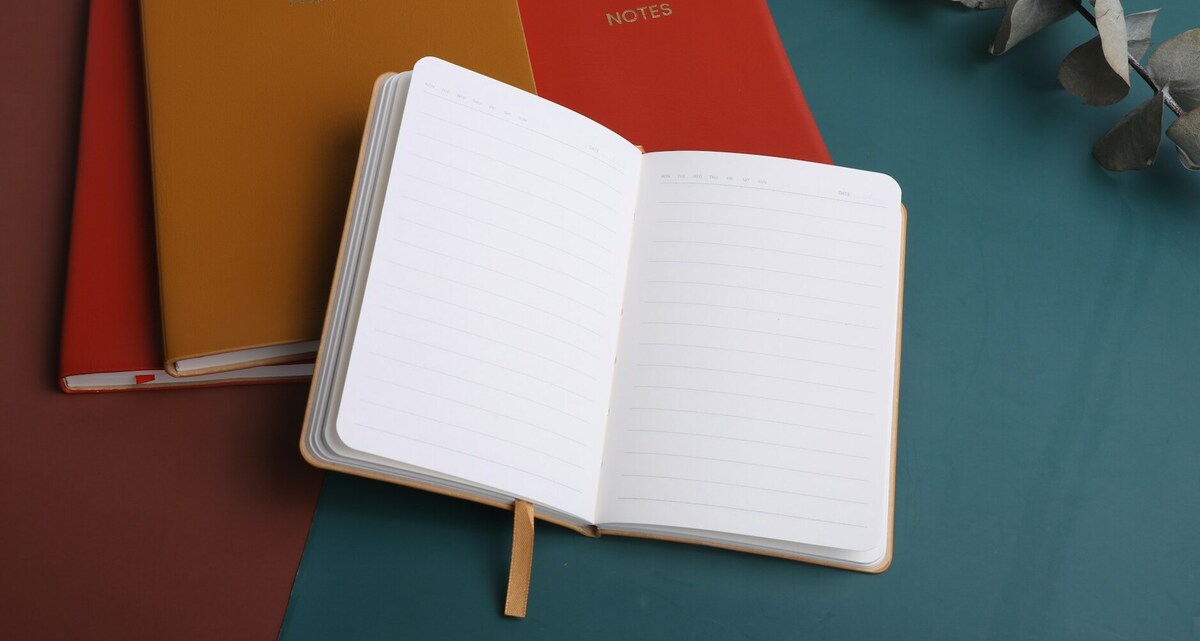
Long before smartphones and computers, humans relied on the simple act of putting pen to paper. Across centuries, one object has remained a constant in the hands of dreamers, thinkers, and creators, the journal notebook. It has carried the weight of ideas, secrets, sketches, and revolutions, surviving the rise and fall of empires, the digital age, and the fleeting nature of trends. But why has this unassuming object remained so essential? Let’s dive into its origins, evolution, and enduring significance.
The Origins: A Legacy of Thought and Expression
The history of the journal notebook is deeply intertwined with human civilization, tracing its roots back to the first attempts at recording information.
- Ancient Times: Thousands of years ago, early humans used cave walls, clay tablets, and papyrus scrolls to document their daily lives, ideas, and discoveries. Ancient Egyptians developed hieratic script on papyrus, creating a format closer to what we recognize as a notebook today. Meanwhile, in China, bamboo strips tied together served a similar purpose.
- Medieval Period: The transition to bound parchment manuscripts in medieval monasteries marked a significant step towards modern notebooks. Monks meticulously recorded religious texts, scientific observations, and historical events in hand-stitched codices, preserving knowledge for future generations.
- Renaissance & Enlightenment: With the invention of the printing press and the spread of paper-making techniques, notebooks became more widely available. Visionaries like Leonardo da Vinci filled pages with sketches and revolutionary ideas, while thinkers such as Isaac Newton used them to record the foundations of modern physics.
- Industrial Revolution: The 19th century saw the mass production of paper and bound notebooks, making them an indispensable tool for scientists, writers, and students. By this time, personalized diaries became popular, shaping the way people documented their lives.
The Timeless Design Approach of the Journal Notebook
The journal notebook is a masterpiece of functional minimalism. Its design follows a philosophy of simplicity, accessibility, and durability, making it a tool that never loses relevance.
1. Simplicity: The Core of Timelessness
A journal notebook is stripped of distractions, no screens, no notifications, just pure blank pages awaiting ideas. The blank slate concept allows for endless creativity, making it an essential tool for writers, artists, and professionals alike.
2. Durability: Designed to Last
Notebooks from legendary brands like Moleskine, Leuchtturm1917, and Rhodia are crafted with acid-free paper, sturdy binding, and high-quality covers that withstand time and wear. Their physical nature allows them to survive for decades, even centuries, unlike digital files that can be lost due to corruption or technological obsolescence.
3. Versatility: Adaptable to Every Era
Journal notebooks have evolved with ruled, dotted, grid, and blank pages, adapting to the needs of engineers, designers, bullet journal enthusiasts, and business professionals. From traditional leather-bound volumes to modern eco-friendly, refillable designs, notebooks remain adaptable to changing times.
4. Emotional Connection: A Personal Companion
Unlike digital devices, a journal notebook holds handwritten notes, sketches, and emotions, making it an intimate and irreplaceable artifact of one’s life. Many writers and artists describe their notebooks as trusted confidants, containing their rawest thoughts and dreams.
Timeless Journal Notebook Models That Have Stood the Test of Time
- Moleskine Classic Notebook – Inspired by the legendary notebooks used by Picasso, Hemingway, and Van Gogh, this model embodies heritage and durability.
- Leuchtturm1917 Notebook – With archival-quality paper and a structured index, this model is favored by professionals and bullet journalists worldwide.
- Rhodia Webnotebook – Known for its ultra-smooth paper and sturdy covers, Rhodia offers a luxurious writing experience for creatives and professionals.
- Field Notes Memo Book – A pocket-sized companion designed for outdoor explorers, writers, and urban creatives.
- Midori MD Notebook – A minimalist yet elegant Japanese-designed notebook celebrated for its high-quality paper and simple aesthetic.


The Future of the Journal Notebook: Why It Will Always Remain Relevant
Despite the dominance of digital devices, the journal notebook will always hold irreplaceable value in human culture. Here’s why:
1. Digital Fatigue Fuels the Need for Analog Tools
With increasing screen time, more people are turning to tactile experiences that promote focus and creativity. Writing in a notebook provides a refreshing break from screens, reducing eye strain and improving mindfulness.
2. The Science of Handwriting
Studies show that writing by hand improves memory, comprehension, and cognitive engagement, giving notebooks an advantage over digital note-taking. The physical act of writing stimulates neural pathways, enhancing creativity and critical thinking.
3. Sustainability and Personal Preservation
Eco-conscious brands are introducing recycled and refillable notebooks, ensuring their relevance in a sustainability-driven future. Unlike digital storage, a notebook requires no electricity, reducing its environmental impact.
4. Nostalgia and Sentimental Value
A handwritten journal holds a personal essence that digital notes lack. Future generations will treasure these tangible records of history. Letters from the past, historical manuscripts, and personal diaries offer a deep emotional connection to human experiences that no cloud storage can replicate.
5. A Physical Legacy That Lasts Beyond Technology
Unlike digital notes, which may become inaccessible due to changing formats, physical notebooks stand the test of time. They serve as personal time capsules, preserving memories for decades, even centuries.
Final Thoughts: The Journal Notebook as a Living Chronicle
The journal notebook is more than just a stationery item, it is an extension of the human mind. Its timeless design, functionality, and emotional depth ensure that it will remain a relevant tool for future generations of writers, artists, and thinkers. Whether you are capturing fleeting thoughts, mapping out groundbreaking ideas, or simply reflecting on your daily life, the journal notebook is, and will always be, a timeless companion.
So, as the world moves forward, one thing remains certain: a blank page will always be waiting, ready to capture the next great idea.