
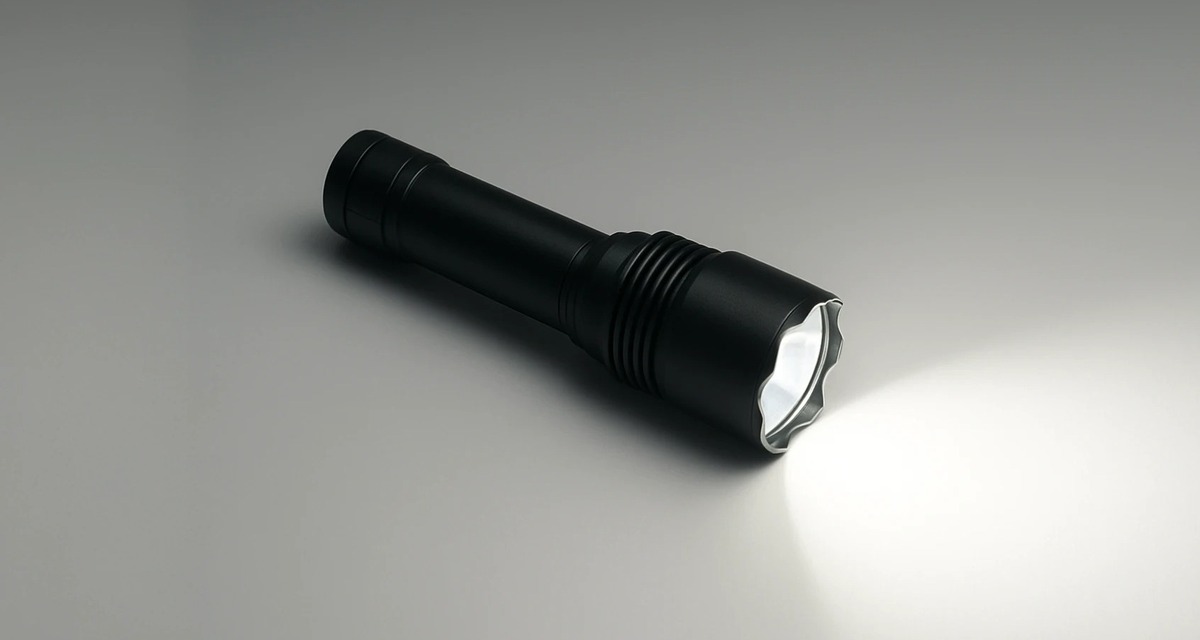
From its humble beginnings at the edge of the 20th century to its elegant, tactical forms in the 21st, the flashlight has remained a design constant, barely touched by the trend waves that sweep through other everyday objects. Why? Because its essence is perfectly simple: light, when and where you need it, in your hand. It doesn’t beg for reinvention because it doesn’t need one.
In this article, we’ll explore the history, design philosophy, and why the flashlight will continue to shine, quite literally, long into the future. We’ll also take a look at a few models that prove its timeless relevance.
The Flashlight’s Origin: Born of Batteries and Bulbs
The flashlight came to life at a unique crossroads in scientific development. In the late 1800s, electricity was still a novelty. Thomas Edison had just introduced the incandescent bulb. At the same time, portable batteries began to surface thanks to innovators like George Leclanché.
It wasn’t long before someone had the bright idea to combine these technologies. In 1899, David Misell, an inventor working with the American Electrical Novelty and Manufacturing Company (which would later become Eveready), filed a patent for a “flash light.” This early model used three D batteries, a paper tube, and a small incandescent bulb. It earned its name because it could only emit a short burst or “flash”of light before the batteries needed rest. Efficiency wasn’t its strong suit, but the potential was clear.
This was the start of a new category: the personal, portable light source, distinct from the fixed gas lamps and bulky kerosene lanterns of the time. The flashlight wasn’t just a gadget. It was a revolution in mobility and autonomy.
Design That Works: The Form-Follows-Function Philosophy
The flashlight is a masterclass in form following function. It doesn’t try to be more than what it is, a device to emit focused light from a portable source. But within that simplicity lies an elegance that designers dream of.
Its shape is determined by the human hand: cylindrical for grip, with a clearly defined beam direction. It doesn’t require instruction. Anyone, from a child to an elder, instinctively knows how to use it.
This is what gives the flashlight its timeless appeal. There’s no learning curve. No interface beyond the on-off switch. Its ergonomics are intuitive, even primal. And its components, body, lens, reflector, bulb, and power source have remained largely unchanged in purpose, even if materials have evolved.
While aesthetics have varied across decades, from the chrome-plated torches of the 1950s to the military-inspired tactical lights of today, the core design language has endured. It speaks utility in a universal dialect.

A Timeline of Light: The Flashlight Through History
Let’s walk through the major eras of flashlight design and see how its evolution reflects larger technological trends.
Early 1900s: Novelty and Curiosity
The first flashlights were sold as curiosities. Powered by zinc-carbon dry cells, they weren’t particularly reliable, but they were safer than candles and lanterns. They often came in brass or steel, and were marketed to early adopters.
1930s-40s: Wartime Refinement
World War II marked a turning point. Flashlights became military essentials, used in trenches, tanks, and airfields. Designs were ruggedized. Waterproofing became crucial. These wartime innovations influenced post-war consumer versions, emphasizing durability and practicality.
1950s-60s: The Age of Plastics
The postwar consumer boom brought plastic-bodied flashlights, making them cheaper and more accessible. This is when the flashlight truly became a household staple, found in drawers, cars, and toolboxes around the world.
1980s-90s: Tactical Rise
This era saw a shift toward specialization. Law enforcement, firefighters, and outdoorsmen demanded lights that were brighter, tougher, and more precise. Enter companies like Maglite, which turned the flashlight into a professional-grade instrument. Aluminum bodies, knurled grips, and adjustable beams became the norm.
2000s-Today: LED and Lithium Evolution
The transition to LED technology around the early 2000s was a seismic leap. LEDs offered brighter light, longer life, and better efficiency. Meanwhile, lithium-ion batteries made them lighter and rechargeable. Yet even with these advances, the form factor stayed familiar. It didn’t need to change. That’s design perfection.
Why the Flashlight Will Always Be Relevant
1. Reliability in Unpredictable Moments
Power goes out. Disasters happen. Phones die. In those moments, we don’t reach for a screen we reach for a flashlight. It doesn’t depend on software, networks, or touchscreens. It’s always ready, especially when designed with physical switches and manual controls.
2. Simplicity That Can’t Be Obsolete
In a time when most products require updates, passwords, and patches, the flashlight remains offline, uncomplicated, and self-sufficient. That purity is exactly what makes it future-proof.
3. Ubiquity Across Cultures and Economies
Flashlights are not bound by geography or income. They’re just as useful in a suburban garage as they are in remote villages with unreliable power. They are democratic tools: universal, inclusive, and essential.
4. Emergency Go-Bag MVP
Every disaster preparedness kit includes one. Every survival list ranks it high. Whether it’s a solar-powered model or a crank-operated one, the flashlight is always mission-critical.
Know more about Maglite Flashlight remarkable history in the video:
Time-Proof Models That Defined the Genre
Some flashlight models have etched their place in design history. Here are a few that demonstrate why timeless design wins:
Maglite D-Cell Series
Introduced in the late 1970s, the Maglite redefined what a flashlight could be. Built like a tank, with a knurled aluminum body and adjustable beam, it was instantly adopted by police departments and handymen alike. It felt like a tool, not a toy.
The Maglite D-Cell isn’t just a flashlight. It’s a cultural icon, often appearing in films and TV. Even today, it’s prized for its weight, balance, and indestructibility.
SureFire 6P
One of the earliest high-performance tactical flashlights, the SureFire 6P arrived in the 1980s and quickly gained favor with military and law enforcement. It used aircraft-grade aluminum, and its compact size paired with serious brightness was a game-changer. It helped create the tactical flashlight category, which remains hugely popular today.
Rayovac Floating Lantern
The ultimate garage-and-camping classic, the Rayovac lantern-style flashlight is a staple. Its big body, wide beam, and affordability made it a go-to for generations. It floats, it lasts, and it’s trusted.
Designing Light for the Future
What does the future hold for flashlight design? We may see smarter batteries, sustainable materials, and integration with modular gear systems, but the basic silhouette is unlikely to change. Even as we experiment with wearable lights, drone-based illumination, or AR headsets, the trusty hand-held flashlight will retain its core role.
Because when the power goes out, we want something tangible, mechanical, and immediate. The future isn’t about removing these tools, it’s about appreciating them more.
Conclusion: A Beam Through Time
The flashlight is more than an object. It’s a design archetype. A tool that captured a fundamental need, portable light, and fulfilled it with grace and clarity. From the earliest metal tubes to today’s titanium-bodied LEDs, its evolution has honored its original purpose without straying into unnecessary complexity.
It’s a shining example of how human-centered design endures. The flashlight will always have a place in our bags, our cars, our drawers, and our stories. Because in a world of gadgets, it remains a tool: pure, focused, and brilliant.
Light when you need it. Always. That’s why the flashlight will never fade.