
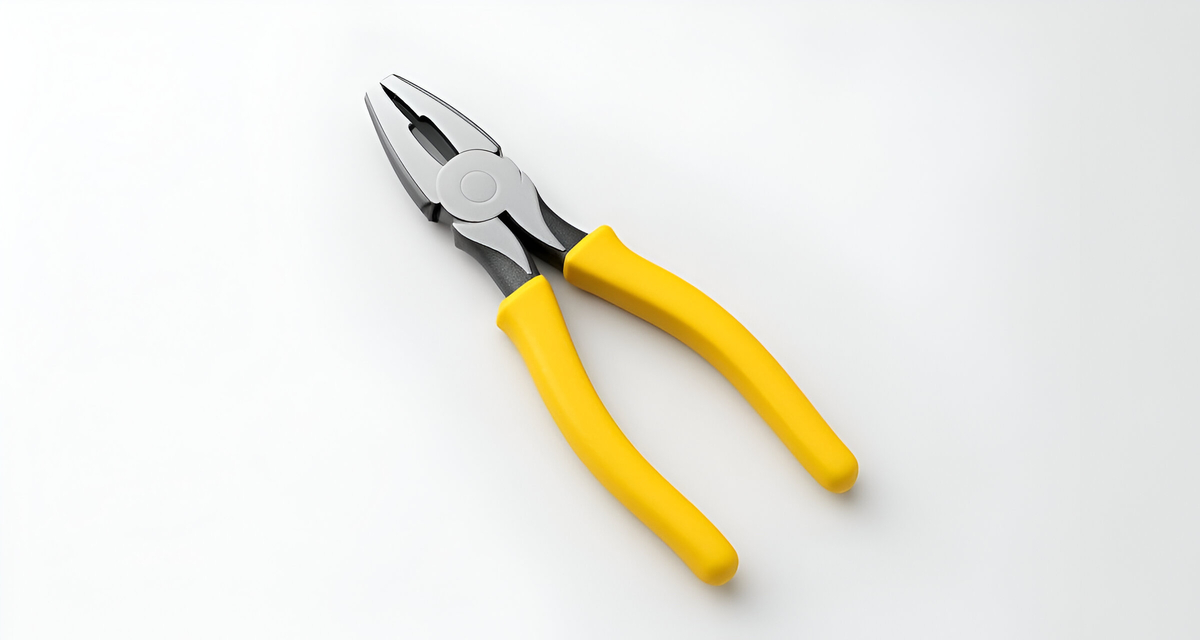
Since their creation, Klein Lineman’s pliers have consistently maintained their utility, popularity, and functional design. In an age where tools often change shape to chase trends, these pliers have stood like iron pillars of reliability, moving almost untouched from the late 19th century to modern job sites. They are more than just a hand tool, they are a design archetype, a symbol of the bond between craftsmanship and industry, and a masterclass in how function defines form.
The story of the Klein Lineman’s Pliers begins in the early years of American electrical work, where the demands of telegraph lines, burgeoning city lighting, and telephone systems required a new breed of tool. These were the years of industrial expansion, when steel towers sprouted on skylines and cables stretched like veins across the nation. The linemen who scaled wooden poles and navigated tangle after tangle of live wires needed a tool that could cut, grip, twist, and hold, all with one strong, reliable motion.
The Birth of Klein Lineman’s Pliers, a Tool Icon
The journey begins in 1857 with Mathias Klein, a German immigrant who had recently settled in Chicago. A local telegraph lineman came to him with a broken pair of pliers. Klein, already known for his blacksmithing skill, repaired one half of the tool and forged the other from scratch. This repair was simple in concept, yet it started something remarkable. Klein’s work proved so precise and strong that word spread quickly among linemen.
At the time, the United States was in the middle of the telegraph revolution. Lines were going up across towns, cities, and states. The work was dangerous and demanding. Linemen needed tools that could cut wire, grip fasteners, and twist conductors without slipping or breaking. Klein recognized that demand and began producing pliers designed specifically for their needs. His early tools were forged from high-quality steel, with jaws shaped for grip and leverage, and handles made for comfort during long shifts.
As a result, Klein Tools quickly became a name trusted by those who worked high above the ground. These workers were not looking for innovation for its own sake. They wanted dependability. And that became Klein’s focus.
The Industrial Expansion and the Rise of the Klein Lineman’s Pliers
By the late 1800s, the United States was entering a period of industrial and electrical expansion. Cities were installing electric street lighting. Homes and businesses were being wired for electricity. Telephones were making their way into urban and rural areas. Linemen were at the forefront of this transformation, and the Klein Lineman’s Pliers became their tool of choice.
The design of these pliers during this era was not just about cutting wire. They had to handle a variety of tasks:
- Gripping bolts and nuts during equipment installation.
- Pulling and stretching cable in awkward positions.
- Bending and twisting conductors with precision.
- Cutting through copper and steel without damaging the cutting edge.
Klein’s pliers offered all of this in one tool, which meant workers could carry fewer tools on dangerous climbs. In a trade where both efficiency and safety mattered, that was a huge advantage.
The Design Philosophy: Function Over Fashion
Many tools evolve in shape because of marketing or material trends. The Klein Lineman’s Pliers are different. They have remained consistent because their design already meets the three pillars of enduring industrial design:
- Form dictated by function – Every curve, angle, and surface serves a purpose.
- Balance of ergonomics and mechanical efficiency – The length of the handles, the position of the pivot, and the width of the jaws are optimized for human hands and maximum force.
- Durability as a core aesthetic – Their look communicates strength and reliability without ornament.
The tapered nose helps reach tight spaces. The serrated jaws grip with authority. The induction-hardened cutting edges stay sharp even after years of cutting. The steel is forged for resilience, resisting wear and impact. This is why the overall silhouette has barely changed in over 100 years.
Historical Moments that Forged the Legacy
Over time, the Klein Lineman’s Pliers became not only a trusted tool but a part of American industrial history.
- Late 1800s – Telegraph Era: Crews stringing telegraph lines across the country depended on them for quick, precise wire work.
- Early 1900s – Electrification Boom: As cities lit up, Klein pliers were in the tool belts of electricians wiring homes, factories, and municipal systems.
- World War II: Utility work and wartime production demanded high-strength tools, and Klein rose to the challenge with models that could withstand extreme conditions.
- Postwar Infrastructure Expansion: The massive projects of the 1950s and 60s, highways, suburbs, and upgraded power grids, all saw Klein pliers in action.
These moments were not just chapters in the tool’s history. They were proof that the pliers could adapt to changing technology while keeping their essential qualities intact.
Klein Lineman’s Pliers Enduring Models
Several Klein Lineman’s Pliers models have stood out as industry benchmarks:
- Klein D213-9: The standard 9-inch model, celebrated for perfect balance between reach and cutting power.
- Klein J2000-9NECR: A high-leverage version that cuts hardened wire while offering comfort grip insulation.
- Klein HD2000 Series: Heavy-duty models built for high-tensile steel wire, favored in industrial and utility work.
- Klein D213-9NETH: Engineered for extra cutting power without changing the iconic form.
Each of these models shows Klein’s philosophy: improve materials and ergonomics, but never change the core geometry.

Material Evolution Without Losing the Core
While the shape has remained familiar, the materials have evolved. Modern Klein pliers are made from custom-forged high-carbon steel, heat-treated for exceptional hardness. Cutting edges are induction-hardened to hold sharpness longer. Handles have shifted from plain plastic coatings to ergonomic dual-material grips that enhance comfort and insulation.
Precision machining at the pivot joint ensures smooth movement and perfect alignment of the jaws. As a result, modern Klein pliers perform better than ever while staying visually and functionally true to their roots.
Why The Klein Lineman’s Pliers Remain Timeless
The Klein Lineman’s Pliers are timeless because the tasks they solve are timeless. As long as there are wires to cut, cables to twist, or components to grip, the tool remains essential. While some jobs may be automated, the unpredictable realities of fieldwork still demand human adaptability. That adaptability pairs best with a versatile, reliable hand tool.
Their relevance also comes from trust built over generations. Many electricians and linemen receive their first pair from a mentor or family member. These tools are not disposable, they become personal gear, often lasting decades.
Even in the future, innovations may include lighter alloys or sensors to measure force or detect live current. However, the fundamental geometry, the pivot, the handles, the jaws, will likely remain unchanged. When a design has already reached equilibrium between strength, control, and efficiency, it becomes future-proof.
A Global Standard
Although Klein Tools began in the United States, its lineman’s pliers are now respected worldwide. In Canada, Australia, Europe, and beyond, they are used alongside local tool traditions. In many markets, they are seen as premium imports, worth the higher price because they last longer and perform better than most alternatives.
This global recognition shows that the laws of physics and good design cross cultural boundaries. Cutting, gripping, and twisting wire works the same in any country, and Klein pliers handle it with unmatched consistency.
The Cultural Connection
Over time, the Klein Lineman’s Pliers have taken on a cultural dimension within the trades. They are often a tradesperson’s first serious tool, marking the transition from learning to professional work. Over the years, the pliers bear the marks of their owner’s career, scuffs, worn grips, and a finish polished by thousands of hours of handling.
This bond is not sentimental alone. It reflects the human appreciation for tools that do not fail. A Klein Lineman’s Plier earns loyalty by working reliably, job after job, year after year.
Built for the Trades of Tomorrow
As the world shifts toward renewable energy, smart grids, and electric vehicles, Klein Lineman’s Pliers will adapt naturally. The tool already excels in cutting thick battery cables, managing solar panel wiring, and handling high-voltage connectors.
The more the world depends on electrical systems, the more it will depend on the people who maintain them. Those people will continue to carry the most reliable, versatile pliers available.
Klein Lineman’s Pliers is More Than Steel and Grip
The Klein Lineman’s Pliers are not just tools, they are a century-and-a-half of problem-solving in your hand. From a single blacksmith’s repair in 1857 to their place on modern utility belts, they have proven that when form and function meet perfectly, design becomes timeless.
In an era of disposable products, these pliers remind us that true quality does not fade. They are built to endure, built to perform, and built to be passed down. As long as there is work to be done, the Klein Lineman’s Pliers will remain a symbol of craftsmanship, precision, and trust.